Hanoi Walks · Vietnam · July 2026
The Complete Hanoi Train Street Guide: Railway Alleys, Café Culture & How to Visit Responsibly
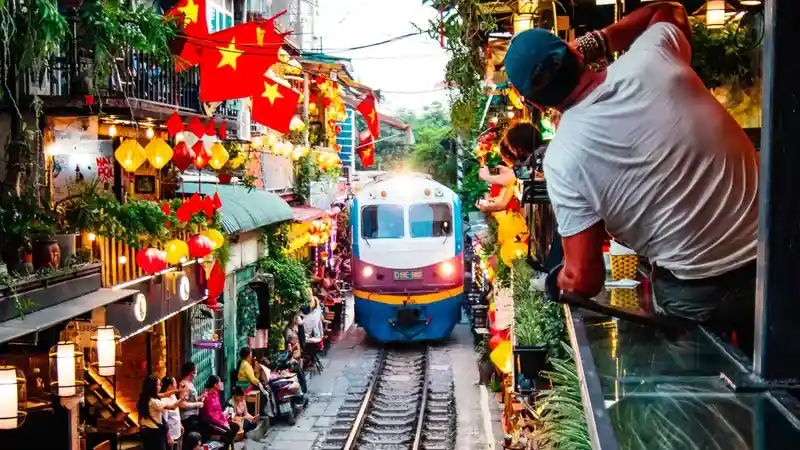
Hanoi Train Street is not a theme park set. It is a residential alley — several alleys, actually — where the north–south railway squeezes between houses close enough to touch passing carriages from your coffee cup. Instagram made it famous; municipal safety enforcement made access unpredictable; locals still hang laundry, raise children, and serve egg coffee metres from the tracks.
If you only chase the train photo, you miss the point. The meaningful experience is understanding how Hanoi's infrastructure was woven through existing neighbourhoods decades ago — and how residents adapted daily life to a schedule of rumbling steel. This guide explains current access realities, safety and etiquette, timing train passes, and why our Train Street Walking Tour routes through hidden alleyways before the railway reveal.
Read the Train Street place guide and hidden gems topic for connected routes. Compare with Old Quarter geography — Train Street sits within walking distance but psychologically distinct from guild-street tourism.
What Is Train Street? Geography & Names
"Train Street" refers informally to railway-adjacent residential lanes — most famously the *ngõ* near Phung Hung Street and Tran Phu in the Old Quarter fringe, plus related access points whose barricade status changes with enforcement campaigns.
The Reunification Express line (Hanoi–Ho Chi Minh City) and regional services use this track. Trains pass multiple times daily; schedules shift — never treat online timetables as gospel without local confirmation.
Buildings are tube-house depth perpendicular to rails — living rooms toward alley, bedrooms stacked above. Cafés opened facing the track when tourism arrived; authorities periodically closed café seating on ties themselves after safety incidents.
You are walking in people's doorways. Act accordingly.
Access Rules: What Changed & What Remains
Between 2019 and 2024, viral tourism led to barricades, café shutdown orders, and police fines for sitting on tracks. As of 2026, independent wandering into sealed alleys risks turned-away visitors or penalties. Access policies evolve — check recent conditions or use a guide who lives the neighbourhood daily.
**Do not assume** 2022 blog posts about "best café on the tracks" remain valid.
**Do assume** residents prefer smaller groups, brief quiet presence, and no drone flights over their roofs without permission.
Our train street tour uses lawful resident-coordinated access and times visits to scheduled train windows — not guaranteed theatrics, but informed positioning.
Safety: Non-Negotiable Rules
Trains are wider and faster than they appear in photos. Suction and debris occur. Locals know exact clearance; tourists underestimate.
**Stand back** when warned — café owners who live there shout instructions for reason.
**Never** place objects on rails, lie down for photos, or let children run toward carriages.
**Headphones off** near track — vibration precedes visible train.
**Alcohol and tracks** do not mix — seen too often on weekend nights.
**Escape routes** matter in narrow alleys — identify side gaps before train arrival.
If access is blocked, accept it. No photograph worth risking injury or resident eviction pressure.
Best Times to See a Train Pass
Schedules vary by day and direction — morning northbound, evening southbound patterns often cited but not contractual. Weekends add leisure travelers crowding cafés.
**Arrive 30 minutes early** to secure legal viewing spot if access allowed.
**Midday heat** empties some alleys — fewer tourists, harsher light.
**Rain** complicates footing on slick brick near rails.
Our guides sync with same-day schedule apps and resident WhatsApp groups — informal but more reliable than copied blog tables.
The Café Culture Around the Tracks
Before enforcement tightened, trackside cafés served egg coffee and beer with countdown clocks to train arrival. Some reopened with seating set back from ties; others serve only in interior rooms.
Ordering coffee supports household businesses adapting to tourism whiplash. Tip fairly if staff coordinate safe positioning — they absorb risk management tourists ignore.
Do not treat servers as photo props. Ask before filming faces.
For broader coffee context, see Hanoi coffee guide and coffee topic.
Photography Ethics & Social Media Reality
The iconic shot — train filling alley frame while drink sits foreground — took thousands of attempts and endangered participants before crackdowns. Today, responsible photography means:
- No middle-of-track poses - No drone harassment of residents - No flash in faces at night - Credit local businesses when publishing
Our photography topic discusses candid street work without exploiting vulnerability.
How Train Street Fits Hanoi's Urban Story
French and Vietnamese urban planners routed rail through dense quarters because bypassing entire districts was economically impossible. Similar patterns appear globally — Hanoi's version is extreme proximity.
Walking approach through hidden alleyways reveals barber poles, kindergarten gates, and mural walls tourists who teleported to trackside miss. Our tour narrative builds that context deliberately — see tour description in best walking tour guide.
Contrast with Long Bien Bridge — open-air river crossing, sunrise photography, different rail geometry.
Expérience Hanoi Train Street
Experience a moment you won't forget
Cette visite commence dans des ruelles que la plupart des visiteurs ne voient pas, puis rejoint Train Street — des voies ferrées qui passent à quelques mètres des maisons. L'accès aux allées peut changer selon les règles locales. Nous ne publions pas d'horaires de train garantis : le passage dépend du jour. S'il n'est pas possible de s'approcher des voies, le guide adapte le parcours dans le quartier. Durée : 2,5 heures. Prix : 18 EUR. Rendez-vous au monument des Héros Tombés, pas au passage à niveau. Visite privée.
Independent Visit vs Guided Tour
**Independent:** Possible only when alleys are legally open — research same-day, accept closure, carry Vietnamese cash for coffee, leave when asked.
**Guided:** Train Street Walking Tour includes alley approach, resident interaction norms, schedule coordination, and continuation into Old Quarter life — not train only.
We do not sell train adrenaline alone. If you want only a selfie on ties, this is the wrong product and possibly the wrong behaviour.
Expérience Hanoi Train Street
Experience a moment you won't forget
Cette visite commence dans des ruelles que la plupart des visiteurs ne voient pas, puis rejoint Train Street — des voies ferrées qui passent à quelques mètres des maisons. L'accès aux allées peut changer selon les règles locales. Nous ne publions pas d'horaires de train garantis : le passage dépend du jour. S'il n'est pas possible de s'approcher des voies, le guide adapte le parcours dans le quartier. Durée : 2,5 heures. Prix : 18 EUR. Rendez-vous au monument des Héros Tombés, pas au passage à niveau. Visite privée.
Combining With Other Hanoi Experiences
**Same day morning:** Old Quarter food walk → afternoon train window (schedule dependent).
**Evening:** Night walking tour from Hoan Kiem Lake — different energy, no train dependency.
**Do not stack** Train Street with Temple of Literature — opposite geography and tone.
**2-day plan:** See 2 days in Hanoi for spacing intense sensory experiences.
Practical Tips
**Footwear:** Closed toe — brick, oil, rail gravel.
**Bags:** Slim profile for narrow passages.
**Language:** Basic Vietnamese greetings appreciated — *xin chào*, *cảm ơn*.
**Money:** Cash for cafés; cards rare in alleys.
**Toilets:** Use before entering residential maze.
**Kids:** Only with strict supervision — not toddler-friendly at active rail moments.
Our travel tips cover Grab drop-off points that avoid dumping you at sealed barricades.
Common Mistakes Travelers Make
1. Copying outdated GPS pins to closed ngõ entrances. 2. Arriving five minutes before train expecting cinematic perfection. 3. Treating residents as backdrop, not hosts. 4. Confusing Train Street with French Quarter boulevards — wholly unrelated districts. 5. Skipping the neighbourhood walk and reducing Hanoi to one viral clip.
Responsible Tourism & Community Impact
Tourism income helped some households; enforcement losses hurt others. Flash crowds strained rubbish collection and sleep schedules. Sustainable visitation means smaller groups, shorter trackside presence, and businesses that pay rent to residents not remote investors.
Hanoi Walks limits private tour frequency in the alley and educates guests on closure respect — if police bar entry, we pivot to hidden gems routes rather than arguing at barricades.
Train Schedule Literacy: Reading Same-Day Reality
Vietnam Railways publishes timetables online — useful orientation, not gospel. Delay culture, freight insertion, and maintenance windows shift passenger trains without tourist notification.
**Northbound vs southbound** feel different in alleys — speed, horn pattern, wind suction vary by locomotive type and cargo load.
**Freight trains** at night still move through — sleep disruption for residents, surprise for visitors assuming daytime-only operations.
**Countdown clocks** in cafés synced to approximate schedules — verify with staff; do not treat LED timers as legal safety guarantees.
Our guides maintain same-day communication with residents — if a train cancels or delays, we extend alley cultural walk rather than manufacturing false urgency.
Neighbourhood Life Beyond the Viral Frame
One block from track: kindergarten morning drop-off, motorbike repair shops, elderly men playing chess behind corrugated doors. Children do homework on stools that tourists later use for coffee. Laundry hangs above rails — do not mistake domestic normalcy for performance art.
Spending 40 minutes in ngõ before any train multiplies respect and comprehension. That is why our tour narrative refuses train-only bookings — see hidden alleyways place.
Legal & Enforcement History (2019–2026)
2019 viral explosion → 2022 safety crackdowns → café seating removals → partial reopenings with setbacks → periodic barricade reinstallations when influencer stunts resume.
Fines for track sitting are real — budget travel forums occasionally report confiscated cameras or escorted exits. Vietnamese-language signage carries authority English stickers lack.
We document this cycle so travelers understand closure is policy response, not random hostility toward foreigners.
What to Wear & Carry in Railway Alleys
Closed shoes mandatory — rusty rail splinters, broken brick, café grease on floors. Sandals fail.
Slim backpack — wide packs snag on passing train edges in tightest alleys.
No tripods extending into track clearance envelope.
Hearing protection optional but wise for children sensitive to horn decibels.
Face mask during dry season when dust swirls post-train.
Alternatives If Train Street Is Closed
Do not abandon Hanoi urban exploration — pivot intentionally:
**Long Bien Bridge** sunrise — rail visible in open air without residential intrusion.
**Old Quarter ngõ** unconnected to track — mural alleys near Ma May.
**Night market streets** — sensory intensity without rail risk.
Our guides execute these pivots weekly when barricades deploy — guests still rate tours highly when alley culture is framed honestly.
Train Street in Vietnamese Media & Soft Power
Domestic news covers enforcement sympathetically toward residents — foreign influencer misbehaviour often cited. Understanding local media framing reduces defensive reactions if asked to leave.
Vietnamese domestic tourists also visit — not only Western Instagram cohort. Queue etiquette applies across nationalities.
Sample Train Street Half-Day (With Guided Access)
**8:00 a.m.** — Meet guide at Old Quarter landmark; coffee and safety briefing.
**8:45 a.m.** — Ngõ approach — murals, barber shop, household greetings.
**9:30 a.m.** — Trackside café setback seating; schedule check.
**10:15 a.m.** — Train pass observation from approved distance.
**10:45 a.m.** — Debrief and resident thanks; tip café staff if they managed positioning.
**11:00 a.m.** — Continue walk toward Dong Xuan or phở lunch — narrative closure.
Independent visitors attempting same flow without relationships risk closure disappointment — manage expectations accordingly.
Post-Train Reflection: What Residents Want You to Remember
Residents do not owe visitors track access. Hospitality extended through café service and tolerated photography is conditional on behaviour — volume control, timely departure, no entitlement when schedules slip.
Leave a positive economic footprint: pay fairly, tip when staff manage safety, buy second coffee, recommend responsible guides not reckless influencer routes. The alley survives tourism only if reciprocity outlasts viral moments.
Insurance, Liability & Realistic Expectations
Active rail proximity is not insured thrill ride — travel insurance medical clauses apply if you ignore barriers and get hurt. Operators cannot waive physics because you paid café cover charge.
**Children** under ten should not stand unsupervised at setback line — hold hands, one parent behind child facing train.
**Alcohol** before train viewing impairs judgement — save beer for Ta Hien later.
Comparing International "Train Cafes" Hype
Thailand, Sri Lanka, and India host famous rail-adjacent tourism — Hanoi's version is narrower, more residential, more enforcement-sensitive. Do not import behaviour from Mae Klong market or Ella Instagram reels — municipal tolerance differs.
Grab Drop-Off & Navigation When Barricaded
If Phung Hung entrance sealed, drivers may drop on parallel street — walk remaining 200 metres on foot asking shopkeepers *đường tàu* politely. Closed metal gates mean turn back — not climb.
**Maps.me and Google** lag barricade updates — human guide or hotel concierge same-day check beats cached foreign blog pin.
Audio Landscape: Horns, Vibration & Neighbourhood Sound
Trains announce with horns locals sleep through — visitors jump. Vibration travels through brick alley walls — cups rattle, nerves spike first time. Second pass same day feels calmer once expectations adjust.
**Dogs bark** chain-triggered down ngõ — not aggression toward you, territorial protocol. Continue calmly.
**Motorbikes** still zip alley mouths unrelated to train — look both ways leaving café setback.
Long Bien Bridge Alternative (Detailed)
If Train Street barricaded entire visit, Long Bien delivers rail romance openly — pedestrians and cyclists share edges while freight rumbles centre span. Sunrise 5:30–6:00 popular with photographers; combine with Old Quarter breakfast phở after descent. Not substitute for alley sociology but honest rail fix when policy closes ngõ.
Communicating With Café Owners & Residents
Learn *xin chào*, *cảm ơn*, *tàu đến chưa* (has the train come yet) — three phrases earning smiles. Pointing at menu works; shouting English louder does not. If owner says *ngồi đây* (sit here), obey — they measure clearance in centimetres daily.
Packing Light for Alley + Train Sequence
Crossbody bag, not backpack swinging into train envelope. No selfie sticks extending into corridor. Sunscreen before alley wait — shade minimal trackside. Insect repellent optional summer dusk. Power bank for delayed trains draining phone anxiety.
Reporting Unsafe Behaviour
If other tourists enter track centre, do not follow herd — café staff and police occasionally intervene; supporting resident requests to step back helps community more than silent filming.
Combining Train Tour With Street Food Same Day
Morning street food tour plus afternoon train window feasible — stomach full, energy high, alley walking already warmed up legs. Reverse order risks missing dawn phở quality. Spacing tours across two days ideal if budget allows — sensory overload real when compressed.
Winter & Rain Season Track Notes
November drizzle slickens brick — footwear grip critical. Summer sweat steams post-train humidity — light cotton dries faster than synthetics. Tet week may reduce train frequency — schedules holiday-thinned; verify rather than assume viral-hour density.
Why We Decline "Quick Train Photo Only" Requests
Hanoi Walks does not offer 15-minute track photo commissions — they disrespect residents and encourage unsafe behaviour. Full train street tour or responsible independent café visit when legally open remain only endorsed options in our editorial policy.
Documenting Your Visit Responsibly
If publishing video, blur children's faces unless permitted — alley kids live here year-round, not content extras. Tag location respectfully without geotagging precise residential addresses that flood homes with uninvited visitors — broader "Hanoi Old Quarter" tagging suffices.
Budget thirty to ninety minutes total alley time including train wait — shorter visits feel rushed to residents; longer loitering without coffee purchase wears welcome thin.
Ask before drone flight anywhere near track — legal and social penalties outweigh aerial clip value; residents report unauthorised drones to authorities.
Share this guide with travel companions before arrival — aligned expectations reduce alley conflict when access rules differ from social media promises.
When in doubt, prioritise resident eye contact and calm departure over one more photograph — reputation of foreign visitors collectively affects whether barricades lift or harden next season.
That reciprocity is the real souvenir.
Final Thoughts
Train Street is unforgettable when approached with context and restraint — a reminder that cities are lived infrastructure, not sets for your reel. The train will pass whether or not your camera is ready. Residents will remain long after your flight home.
Walk the alleys first. Drink coffee second. Watch the train third. Thank someone fourth. Leave quietly fifth.
That sequence honours Hanoi better than any middle-of-track photograph.
Questions fréquentes
Is Train Street still open to tourists in 2026?
Access changes with municipal enforcement. Some railway-adjacent alleys that were open to café tourism faced barricades and fines in recent years. Do not rely on outdated social media pins — verify current conditions locally or visit with a guide who coordinates lawful resident access. Closure without notice is possible.
When does the train pass through Train Street?
Multiple trains use the line daily, but exact times vary by direction, day, and season. Arrive at least 30 minutes before an expected window and confirm same-day schedules. Our Train Street Walking Tour synchronises with current timetable information and local resident updates rather than static blog charts.
Is Train Street dangerous?
Active railway in a narrow residential alley is inherently hazardous if you stand on or too close to tracks. Trains are wider and faster than they appear. Follow café staff and guide instructions, keep children controlled, and never pose on rails. Responsible viewing from legal setbacks is the goal — not adrenaline stunts.
Where is Train Street located in Hanoi?
The famous railway alleys sit on the Old Quarter fringe near Phung Hung and Tran Phu streets — walking distance from Hoan Kiem Lake but distinct from guild-street cores. Grab drop-off points should be chosen carefully because barricaded entrances change. Our tour approaches through residential ngõ rather than dumping guests at sealed gates.
Can I visit Train Street without a guide?
Sometimes, when alleys are legally accessible — but you risk wasted trips during closures, unsafe positioning, and resident hostility if you behave like a set photographer. A guided walk adds schedule coordination, alley context, and behavioural coaching. Independent visitors should accept closure gracefully and avoid track-centred posing.
What is included in the Hanoi Train Street Walking Tour?
Our private tour routes through hidden Old Quarter alleys before the railway section — local life, murals, residential rhythm — then times train viewing where access allows. It is not a train-only photo sprint. The tour continues connecting Train Street geography to broader Hanoi street culture. See full itinerary on the tour booking page.
Envie de créer votre propre histoire ?
Réservez une visite à pied et vivez le vrai Hanoï.
Réserver via WhatsAppRécits associés
Lieux associés
Hidden Gems
Discover hidden Hanoi — alleyways, quiet courtyards, and local corners most visitors walk past without noticing.
2 guides
Voir le thème →Visites associées
Expérience Hanoi Train Street
Experience a moment you won't forget
Cette visite commence dans des ruelles que la plupart des visiteurs ne voient pas, puis rejoint Train Street — des voies ferrées qui passent à quelques mètres des maisons. L'accès aux allées peut changer selon les règles locales. Nous ne publions pas d'horaires de train garantis : le passage dépend du jour. S'il n'est pas possible de s'approcher des voies, le guide adapte le parcours dans le quartier. Durée : 2,5 heures. Prix : 18 EUR. Rendez-vous au monument des Héros Tombés, pas au passage à niveau. Visite privée.
Visite à pied du Vieux Quartier de Hanoï
Marchés, ruelles et vie locale
C'est la visite du Vieux Quartier de Hanoï — axée sur les 36 rues, les marchés locaux, les ruelles cachées et le rythme quotidien du centre historique. Si vous cherchez l'architecture coloniale, l'Opéra et l'histoire de l'indépendance, choisissez plutôt notre visite distincte Histoire et Quartier Français. Entrez au cœur du Vieux Quartier et découvrez son histoire, sa culture et sa vie quotidienne à travers rues cachées, marchés locaux et monuments emblématiques. Cette visite à pied offre un aperçu authentique du passé et du présent de la ville, guidée par des histoires locales et des expériences réelles. Du monument symbolique des Héros Tombés au légendaire pont Long Biên, chaque étape révèle une facette différente de Hanoï — sa résilience, ses traditions et le rythme vibrant de la vie quotidienne.