Hanoi Walks · Vietnam · July 2026
Hidden Gems in Hanoi: Alleys, Quiet Courtyards, and Local Corners Most Walkers Miss
Hanoi hides in plain sight. The postcard image — Hoan Kiem Lake, red bridges, phở steam — is real but incomplete. The city's most memorable moments happen in ngõ (alleyways) too narrow for tour buses, on railway lines that still split residential blocks, and on a colonial bridge where vendors sell fruit at dawn to cyclists crossing the Red River. Most visitors walk past these places without entering because there is no sign, no ticket booth, and no English menu — only a threshold that looks like someone's front door.
"Hidden gem" is travel-writing cliché until you stand in a courtyard where three generations share one kitchen and laundry dries above your head. This guide maps the geography of hidden Hanoi — not as a scavenger hunt of secret addresses that vanish when published, but as a way of seeing: how to enter respectfully, what to notice, when a guide transforms access, and which iconic "hidden" spots (Train Street, Long Bien) require context rather than Instagram courage alone.
Our guides live in these neighbourhoods. The Train Street walking tour and Old Quarter walking tour deliberately include lanes absent from free map pins. Read alongside best walking tour comparison and Old Quarter place guide for orientation.
The Logic of Hidden Hanoi: Tube Houses and Alley Networks
Old Quarter architecture packs depth behind narrow facades — tube houses (nhà ống) stretch far back from street frontage. Commerce faces the street; family life continues through successive courtyards connected by ngõ. Entire micro-neighbourhoods exist accessible only via a two-metre-wide gap between shopfronts.
Once you understand that logic, "hidden" means **behind**, not **far**. The gem is ten metres off a street you already walked twice. The barrier is not distance — it is not knowing which doorway leads to a shared well versus a private home.
Hidden Alleyways: How to Explore Without Intruding
Start from our hidden alleyways place guide. Practical rules:
**Walk, don't ride.** Motorbikes in ngõ endanger children and elders. Walk at human speed.
**Follow one alley in, one alley out.** Grid logic eventually returns you to a main street — or ask a local "đi ra phố" (way to main street) with a smile.
**Photograph architecture, not people without consent.** Alleys are homes, not sets.
**Go weekday mornings.** Weekends get local traffic; weekday late mornings show domestic routine — cooking prep, school uniforms, scooter washing.
Notable ngõ clusters exist near Hàng Bồ, around Dong Xuan's western fringe, and south of the lake toward Lý Quốc Sư. Avoid forcing access during midday nap hours (12–2pm) when doors close and dogs rest.
Train Street: Iconic, Controversial, Misunderstood
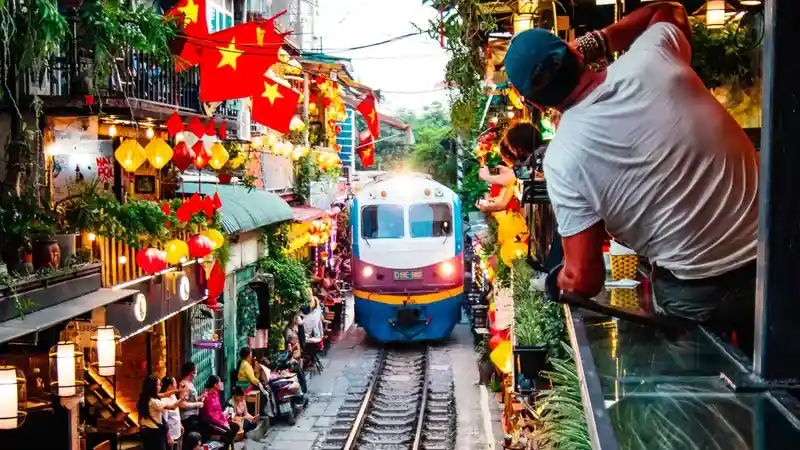
Train Street — railway residential lanes where trains pass metres from doorsteps — became globally famous through photography and café culture. Access has tightened periodically for safety; unofficial tourism strained residents who never asked for flash crowds.
Hidden-gem status here means **understanding life beside infrastructure**, not chasing the perfect train selfie. Residents cook, sleep, and raise children along tracks that predate Instagram. A responsible visit:
- Uses a guide who knows current access points and resident expectations. - Avoids sitting on active track beds during approach windows. - Supports cafés that employ locals rather than pop-up tourist traps. - Accepts that closure orders may apply without warning.
Our Train Street walking tour adapts to conditions weekly — not to evade rules, but to respect them while still teaching the urban story.
Expérience Hanoi Train Street
Experience a moment you won't forget
Cette visite commence dans des ruelles que la plupart des visiteurs ne voient pas, puis rejoint Train Street — des voies ferrées qui passent à quelques mètres des maisons. L'accès aux allées peut changer selon les règles locales. Nous ne publions pas d'horaires de train garantis : le passage dépend du jour. S'il n'est pas possible de s'approcher des voies, le guide adapte le parcours dans le quartier. Durée : 2,5 heures. Prix : 18 EUR. Rendez-vous au monument des Héros Tombés, pas au passage à niveau. Visite privée.
Long Bien Bridge: Dawn Market and Industrial Romance
Long Bien Bridge — Gustave Eiffel's 1902 railway crossing — offers sunrise photography, fruit vendors at the Red River shore, and a working-class geography tourists skip en route to checklist temples. Arrive before 6am for soft light and market energy; later hours bring heat and sparse shade.
Walking the bridge requires situational awareness — trains still run; stay clear of track centres; hold bags close on crowded sections. Combine with Old Quarter morning phở — see morning phở — then taxi or walk north depending on energy.
This is hidden gem terrain because it is **functional infrastructure**, not a polished attraction. Beauty is accidental — rust, river mist, bicycle loads of bananas.
West Lake Backstreets and Tran Quoc Fringes
West Lake feels upscale along main roads but hides village temples, quiet cafés on unnamed lanes, and lotus ponds behind walls. Tran Quoc Pagoda draws crowds at sunset; morning west-lake ngõ near Nhat Tan flower villages (seasonal) shows domestic lakeside life.
Rent a bicycle if confident in traffic — lakeside loops reveal geography invisible from taxis. Our city tour covers West Lake with Ba Dinh synthesis if you prefer guided pacing.
French Quarter Courtyards and Embassy Lanes
The French Quarter hides green courtyards behind diplomatic gates and colonial villas converted to restaurants or offices. Phan Đình Phùng boulevard's tree tunnel is famous; one block east, quiet lanes hold art galleries and vintage shops without signage.
Hidden here means **vertical and inward** — look through open gates (without entering private property), notice architectural detail at door heights, hear schoolchildren in colonial-era schoolyards.
Pair with French Quarter tour for historical framing — otherwise courtyards become pretty walls without story.
Food Gems Without English Menus
Hidden culinary gems are often **unmarked stalls** at ngõ mouths — bún chả where smoke is the only sign, cháo quẩy (dough sticks with porridge) at dawn, ốc (snail) corners active only after 6pm. Our street food guide and Old Quarter food article teach dish identification; hidden gem framing adds **location logic** — follow school dismissal crowds, construction workers at lunch, elderly men on stools at beer hour.
Coffee Corners Beyond Giảng Café
Giảng and Cà Phê Phố Co are famous — therefore no longer hidden. Hidden coffee means **sidewalk roasters** on Coffee Street periphery, elderly men brewing phin filters on low tables in unnamed lanes, and coconut coffee experiments in student-heavy alleys near universities. Deep dive: Hanoi coffee guide.
Art, Craft, and Quiet Museums
Vietnam Fine Arts Museum and smaller galleries on Tràng Tiền side streets reward slow afternoons — hidden from checklist tourists racing mausoleum queues. Craft villages (Bat Trang ceramics) sit outside central Hanoi — viable half-day if "hidden" includes **traditional production** not visible in Old Quarter retail.
Night Hidden Gems: After the Neon
Daytime hidden gems differ from night. Post-10pm ngõ quiet returns — cats on walls, elders watching football on tiny TVs, night phở vendors serving taxi drivers. Night walking tour accesses this rhythm safely; solo wandering requires street-smart awareness and offline maps.
Beer Street is explicitly not hidden — but adjacent parallel lanes often are, carrying local bia hơi without tour group noise.
Photography Ethics for Hidden Spots
Hidden gems die when disrespected. Do not drone residential ngõ without permission. Do not flash trains in faces at Train Street. Do not enter courtyards uninvited. The goal is sustained access for future travelers — not viral moment for you.
Our photography-topic editorial cross-links seasonal light guidance from best time to visit — autumn mornings favour ngõ depth; summer nights favour neon alley contrast.
When You Need a Guide
You can discover hidden Hanoi alone — with time, patience, and Vietnamese phrases. Guides accelerate:
- **Access interpretation** — which courtyards welcome walkers. - **Safety at Train Street and Long Bien** — timing and rules. - **Language for food ordering** in unmarked stalls. - **Narrative** — why this alley was a silk guild, why that wall is French-era.
Compare tour types in best walking tour Hanoi. Hidden-gem seekers often combine Train Street + Old Quarter ngõ in custom private routes.
Visite à pied du Vieux Quartier de Hanoï
Marchés, ruelles et vie locale
C'est la visite du Vieux Quartier de Hanoï — axée sur les 36 rues, les marchés locaux, les ruelles cachées et le rythme quotidien du centre historique. Si vous cherchez l'architecture coloniale, l'Opéra et l'histoire de l'indépendance, choisissez plutôt notre visite distincte Histoire et Quartier Français. Entrez au cœur du Vieux Quartier et découvrez son histoire, sa culture et sa vie quotidienne à travers rues cachées, marchés locaux et monuments emblématiques. Cette visite à pied offre un aperçu authentique du passé et du présent de la ville, guidée par des histoires locales et des expériences réelles. Du monument symbolique des Héros Tombés au légendaire pont Long Biên, chaque étape révèle une facette différente de Hanoï — sa résilience, ses traditions et le rythme vibrant de la vie quotidienne.
Hidden Gems vs Overtourism
Publishing addresses creates crowds; this guide emphasises **patterns** over pins. Return visits reward relationship — second-day phở vendor remembers your order; alley tea vendor gestures you to sit. Hidden Hanoi is relational as much as geographic.
Two-Hour Hidden Gem Micro-Itinerary
**Hour one:** Enter ngõ cluster west of Dong Xuan — walk without GPS destination; exit near Long Bien approach.
**Hour two:** Riverside fruit market under bridge if dawn; otherwise coffee on west-lake back-lane with bicycle traffic observation.
Extend to half-day by adding Train Street with guide — do not self-append without current access information.
Final Thoughts
Hidden gems in Hanoi are not treasure chests — they are **permission to look sideways**. The lake is beautiful; the ngõ behind your hotel may be more truthful. Walk slowly, enter quietly, eat where smoke rises from alley mouths, and accept that some doors remain closed — that closure is part of the city's privacy, not your failure.
When you want hidden Hanoi with context and respect, our guides walk these lanes daily — not performing discovery, but sharing neighbourhood life we already belong to.
Song Hong Riverfront and Banana Island Edges
Beyond Long Bien, Red River mudflats and seasonal banana gardens (chuối) expose rural texture minutes from skyscrapers. Not polished parks — muddy paths, fishing nets, and ferry whispers. Best at dawn with local joggers; avoid unmarked soft ground during flood season (August–September peaks).
Ceramic Road and Mosaic Wall Discoveries
The Ceramic Road along the Red River levee — world's longest ceramic mosaic — rewards slow bicycle pace. Hidden segments lack crowds found at central lake. Connects geographically to Long Bien approaches for half-day exploration outside ngõ density.
Antique Shops and Quiet Galleries on Trang Tien Fringe
Parallel to opera house glamour, unmarked antique shops sell propaganda posters, lacquerware, and war-era memorabilia — negotiation expected. Galleries rotate monthly exhibitions; check Facebook pages same morning if rain forces indoor pivot from alley plans.
Residential Markets That Are Not Dong Xuan
Hom Market (Chợ Hom) and smaller neighbourhood morning markets serve locals without tour bus parking. Less photogenic than Dong Xuan but more authentic for produce colours and breakfast cháo hunters. Combine with street food guide dish vocabulary before visiting — vendors rarely speak English.
Hidden Temples Without Ngoc Son Crowds
Quan Thanh Temple near West Lake, Voi Phuc Temple west of Ba Dinh, and neighbourhood đình (communal houses) in ngõ host morning incense without ticket queues. Dress modestly; donations optional. Our city tour passes major sites; hidden temple hunting suits day-three self-exploration after this guide's patterns.
Listening for Hidden Hanoi: Soundscape Walk
Close eyes briefly in ngõ — chop rhythm, radio news, scooter horns Doppler past, fish sauce splatter in woks. Hidden gem experience is sonic as much as visual. Night tours amplify different frequencies — karaoke distant, bia hơi clink, night cricket near lake.
Safety Recap for Independent Hidden-Gem Seekers
Stick to central districts (Hoan Kiem, Ba Dinh fringes, Hai Ba Trung near Train Street) after dark initially. Carry offline maps — alley GPS jumps. Travel in pairs in active railway zones. Trust gut on aggressive touts claiming "secret" access fees — legitimate guides state prices upfront on official channels.
Why Hidden Gems Matter for Repeat Visitors
Second-trip travelers often report hidden ngõ walks surpass first-trip mausoleum memory. Relationship depth — same coffee vendor twice, same alley grandmother nodding recognition — transforms tourism into belonging illusion. Hidden Hanoi is the return ticket's reward.
Mapping Mentality: How to Read Addresses in Ngõ
House numbers restart within alleys — "number 12" on main street unrelated to "number 12" inside ngõ. Directions reference landmarks ("third alley after pharmacy") not GPS pins. Hidden gem hunters who embrace landmark navigation succeed; those insisting on Google exactitude frustrate themselves at every courtyard fork.
Collaborations With Local Artists and Musicians
Hidden courtyards occasionally host weekend acoustic sessions or pop-up galleries — ephemeral, word-of-mouth. Ask café owners on Coffee Street Thursday evenings if curious; no central listing exists by design. Spontaneity preserves authenticity.
Train Street Café Ethics Expanded
Choose cafés employing residents of the lane, not outside investors who leased during tourism boom. Spend minimum drink price without occupying table hours during train windows if others wait. Do not climb rooftops for angles — falls and resident anger both real. Follow guide instructions when access corridors shift — municipal safety orders protect lives, not bureaucratic inconvenience.
Long Bien Market Vendors: Conversation Starters
Fruit sellers at dawn often appreciate basic Vietnamese fruit names attempted — chuối (banana), thanh long (dragonfruit). Purchases need not be large; small bag supports livelihood and opens photo permission dialogue. Without purchase, admire quietly and move on — vendors are working, not performing.
Hidden Waterways and Lakes Beyond West Lake
Truc Bach Lake — where John McCain's aircraft wreckage narrative connects — quieter than Hoan Kiem. Bay Mau Lake lotus ponds seasonally photogenic. These secondary lakes suit hidden gem seekers who already know main lake loops from day one of 2 days in Hanoi.
Combining Hidden Gems With Food Goals
Hidden ngõ often hide best bún chả — smoke trail discovery method from street food guide. Do not separate "sightseeing hidden gems" from eating; in Hanoi they are the same walk. Carry cash small notes into alleys without ATMs.
Final Hidden Gem Principle
If a place feels discovered because no English sign exists, assume locals discovered it centuries ago. Humility preserves access — the gem was never yours to find, only to witness briefly with permission.
Hidden Gems for Photographers: Lens Choices
35mm equivalent walk-around lens suits ngõ tight spaces; 50mm flatters portrait requests if permission granted. Wide-angle distorts tube-house depth unnaturally — use sparingly. Tripods obstruct narrow alleys — handheld courtesy default. Rain season reflections double visual interest if gear protected.
Hidden Gems for Food-First Travelers
Alley mouth grills often outperform main-street restaurants with English banners — cross-reference best street food Old Quarter dish list with ngõ smoke signals. Hidden gem hunting without eating is incomplete Hanoi — plan calories accordingly.
When Hidden Becomes Overtouristed: Adaptation
Train Street fame changed resident life — adapt by visiting weekday mornings, spending at resident-linked cafés, and accepting closure days as neighbourhood self-protection. Hidden gems evolve; guides update monthly; articles emphasize principles over frozen coordinates for this reason.
Closing Invitation
Tell us your hidden gem after walking — we collect guest discoveries to refine private routes ethically without publishing private residential addresses. Your unnamed alley story may become next season's guided context for future travelers who will never know the pin, only the pattern.
Hidden Gem Safety Equipment
Offline Google Maps downloaded for Hanoi centre. Portable charger — photo-heavy ngõ walks drain battery. Small flashlight for unlit alleys after 8pm. Whistle unnecessary in central districts but situational awareness mandatory. Share live location with travel partner when splitting ngõ exploration directions.
Parting Thought on Hidden Hanoi
The city reveals hidden layers proportional to attention paid — not dollars spent, not miles walked blindly. Slow down, and Hanoi hides less; rush, and even famous lake feels opaque. Hidden gems are a practice, not a place list.
Questions fréquentes
Can I visit Train Street on my own?
Access rules change and resident tolerance varies. Self-visits risk blocked entry or unsafe track positioning. A guided Train Street tour adapts to current conditions and explains etiquette — strongly recommended over solo attempts driven by social media pins.
What is a ngõ in Hanoi?
A narrow alley connecting street frontage to courtyard homes and parallel lanes — the backbone of Old Quarter residential life. Ngõ are living spaces; walk quietly, avoid blocking scooters, and ask before photographing residents.
Where is the best sunrise hidden gem photography?
Long Bien Bridge and Red River fruit market at dawn — arrive before 6am. Hoan Kiem Lake offers softer hidden angles on the east shore weekday mornings before tour groups arrive.
Are hidden gem alleys safe at night?
Generally yes in central districts with foot traffic — but lighting is uneven and maps confuse. Night walking tours or sticking to main streets after midnight reduces risk for first-time visitors.
Do hidden gem food stalls have vegetarian options?
Rarely labeled. Look for đậu phụ stalls, Buddhist vegetarian days near temples, or tell a guide dietary needs in advance on private food walks.
How do I find hidden spots without a list of addresses?
Follow turnover signals — smoke, school crowds, elderly beer drinkers — and enter ngõ parallel to streets you already know. Patterns in this guide matter more than pinned coordinates that go stale.
Envie de créer votre propre histoire ?
Réservez une visite à pied et vivez le vrai Hanoï.
Réserver via WhatsAppRécits associés
Lieux associés
Hidden Alleyways
Explore Hanoi's hidden alleyways — narrow ngõ lanes, tube houses, and residential life behind shopfronts.
Explorer le lieuTrain Street
Explore Hanoi Train Street — railway alleys, café culture, and one of the city's most distinctive walking experiences.
Explorer le lieuLong Bien Bridge
Explore Long Bien Bridge — Gustave Eiffel's railway bridge, Red River views, and sunrise photography in Hanoi.
Explorer le lieuHidden Gems
Discover hidden Hanoi — alleyways, quiet courtyards, and local corners most visitors walk past without noticing.
2 guides
Voir le thème →Visites associées
Expérience Hanoi Train Street
Experience a moment you won't forget
Cette visite commence dans des ruelles que la plupart des visiteurs ne voient pas, puis rejoint Train Street — des voies ferrées qui passent à quelques mètres des maisons. L'accès aux allées peut changer selon les règles locales. Nous ne publions pas d'horaires de train garantis : le passage dépend du jour. S'il n'est pas possible de s'approcher des voies, le guide adapte le parcours dans le quartier. Durée : 2,5 heures. Prix : 18 EUR. Rendez-vous au monument des Héros Tombés, pas au passage à niveau. Visite privée.
Visite à pied du Vieux Quartier de Hanoï
Marchés, ruelles et vie locale
C'est la visite du Vieux Quartier de Hanoï — axée sur les 36 rues, les marchés locaux, les ruelles cachées et le rythme quotidien du centre historique. Si vous cherchez l'architecture coloniale, l'Opéra et l'histoire de l'indépendance, choisissez plutôt notre visite distincte Histoire et Quartier Français. Entrez au cœur du Vieux Quartier et découvrez son histoire, sa culture et sa vie quotidienne à travers rues cachées, marchés locaux et monuments emblématiques. Cette visite à pied offre un aperçu authentique du passé et du présent de la ville, guidée par des histoires locales et des expériences réelles. Du monument symbolique des Héros Tombés au légendaire pont Long Biên, chaque étape révèle une facette différente de Hanoï — sa résilience, ses traditions et le rythme vibrant de la vie quotidienne.