Hanoi Walks · Vietnam · July 2026
The Complete Hanoi Old Quarter Guide: 36 Streets, Local Life & How to Explore on Foot
The Hanoi Old Quarter is not a museum district frozen in time. It is a working neighbourhood where families have sold silk, silver, and spices from the same narrow shopfronts for generations — and where motorbikes still thread between plastic stools at 7 a.m. while a pot of phở simmers on the sidewalk.
Most visitors arrive expecting chaos. They leave understanding rhythm: the morning market rush, the midday lull when shutters half-close against the heat, the evening return of beer corners and grilled pork smoke. The quarter rewards walkers who slow down. This guide explains how to read the street layout, when to go, what to eat, and which routes connect the quarter to the rest of central Hanoi.
For deeper dives on food and planning, see our street food topic hub and the dedicated Old Quarter place guide. If you prefer a guided introduction, our Hanoi Old Quarter Walking Tour covers the same geography with a local who walks these lanes every day.
Understanding the 36 Streets
Hanoi's Old Quarter — *Phố Cổ* in Vietnamese — grew outward from the imperial citadel and Hoan Kiem Lake from the 11th century onward. Merchants organised themselves into guild streets: each lane specialised in a trade, and many street names still reflect that history.
Hang Bac means Silver Street. Hang Gai sold hemp and later silk. Hang Ma bursts with paper offerings before Tết. Hang Thiec once meant tinsmiths. You do not need to memorise all 36 names, but recognising the pattern helps: *Hàng* (merchandise) plus the product sold.
The architecture is equally telling. Tube houses — *nhà ống* — stretch deep behind narrow façades, a tax-era design that maximised street frontage while keeping family workshops and courtyards hidden behind. Peek through open doorways when invited; many ground floors remain active workshops, not souvenir shops.
The quarter's boundaries are informal rather than walled. Roughly, think of the rectangle north and west of Hoan Kiem Lake, bounded on the north by Dong Xuan Market and Long Bien Bridge, and on the west by the French Quarter's tree-lined boulevards. Street numbers jump between districts; navigation by landmark works better than by address alone.
Best Times to Visit the Old Quarter
Timing changes everything in the Old Quarter.
**Early morning (6–9 a.m.)** is when locals eat phở and bún chả before work. Streets are busy but purposeful — fewer tour groups, more delivery bikes stacked with produce. This is the window described in our morning phở story: broth at its best, stools filling by 6:30.
**Late morning to early afternoon (10 a.m.–2 p.m.)** brings heat and some shop closures. Useful for museum-style browsing inside air-conditioned cafés, less ideal for long outdoor walks.
**Late afternoon (4–6 p.m.)** sees school pickup, coffee reunions, and vendors prepping dinner grills. Light softens on ochre walls — excellent for photography without the full night crowd.
**Evening (after 7 p.m.)** shifts energy toward Ta Hien beer street and night food stalls. Our night walking tour follows this rhythm from the lake outward.
Weekends around Hoan Kiem Lake close to motor traffic and fill with families; the Old Quarter lanes themselves stay open to bikes, so expect crowds near the lake shore more than deep inside guild streets.
How to Navigate Without Getting Lost
The Old Quarter grid looks impenetrable on a map. In practice, three rules simplify it.
First, **use Hoan Kiem Lake as your compass**. Nearly every lane eventually spills toward or away from the water. If you are disoriented, walk downhill toward wider streets with lake views.
Second, **follow one main artery at a time**. Hang Gai, Hang Dao, Ta Hien, and Cau Go each run roughly parallel. Pick one, walk its length, then cut across on a perpendicular lane. Zigzagging every alley on the first visit creates fatigue without context.
Third, **accept that motorbikes own the pavement**. Walk single file, check both directions before stepping off a curb, and do not stop mid-lane for photos without pulling into a doorway. Locals navigate with fluid confidence; mirroring their pace keeps you safer than freezing in place.
Offline maps help, but a paper map from your hotel plus landmark names beats staring at a screen in traffic. Our guides on the Old Quarter walking tour teach this navigation explicitly — many guests say it is the skill they use for the rest of their Hanoi stay.
What to See: Landmarks Worth Your Time
You cannot see everything in one pass. Prioritise by interest.
**Dong Xuan Market** is the wholesale heart — fabrics, housewares, meat halls on the ground floor. Go early for atmosphere; midday is hot and crowded. Pair it with our markets topic for context on what each section sells.
**St. Joseph's Cathedral** (Nha Tho Street) anchors the French Quarter edge — neo-Gothic brick, weekend wedding photos, coffee shops on the square. It marks the transition from guild streets to colonial boulevards; see also our French Quarter guide.
**Ancient House at 87 Ma May** preserves a restored tube house open to visitors — rare chance to see interior courtyard layout without intruding on private homes.
**Bach Ma Temple** on Hang Buom is among the oldest spiritual sites in the quarter — small, incense-heavy, easy to miss behind commerce.
**Long Bien Bridge** sits at the quarter's northeastern edge. Gustave Eiffel's railway bridge still carries trains; sunrise and late afternoon walks across it are iconic. Our Long Bien place guide covers access and safety.
Street Food: Where Locals Actually Eat
Tourist menus on Hang Gai advertise "authentic phở" at inflated prices. Locals eat one street over, on lanes where English signage is absent and plastic stools outnumber tables.
Start with **phở bò** before 9 a.m. on any lane where office workers queue. **Bún chả** — grilled pork with dipping sauce — is a lunch institution; the alley near Hang Than remains famous though lines can be long. **Bánh mì** works as a walking snack. **Egg coffee** belongs to a separate ritual — see our upcoming coffee guide and the coffee topic hub.
Our dedicated article Best Street Food in Hanoi Old Quarter names dishes and behavioural cues (busy locals, fresh turnover) without turning the quarter into a checklist of addresses that go stale. Street food culture moves; principles last longer than pinned GPS points.
For a structured introduction with a guide who orders in Vietnamese and explains each dish, the street food walking tour stops at family-run stalls we eat at ourselves — not commission-driven restaurants.

Visite à pied Street Food de Hanoï
Taste the real Hanoi
Goûtez les plats vietnamiens les plus célèbres, dont phở, bún chả, bánh mì et café aux œufs, en explorant le Vieux Quartier animé.
Markets, Craft Streets & Shopping
Shopping in the Old Quarter ranges from wholesale chaos to refined silk tailoring.
**Hang Gai and Hang Bia** concentrate silk, áo dài fittings, and lacquerware. Quality varies; reputable shops welcome questions about material and origin. Bargaining is normal in market stalls, less so in fixed-price boutiques.
**Hang Ma** before lunar new year sells paper votive goods — vivid, photogenic, culturally significant. Visit respectfully; these are ritual items, not props.
**Dong Xuan** and side alleys supply kitchenware and textiles locals buy. Tourists often skip these sections; they reveal supply chains feeding the street food you ate an hour earlier.
Avoid buying from aggressive touts who intercept you on Hang Gai with "custom suit in one hour" pitches unless you have verified reviews. The quarter has excellent tailors; it also has volume traps.
Hidden Alleys & Quiet Corners
The postcard Old Quarter is loud. Ten metres into a residential *ngõ* (alley), volume drops.
Hidden alleyways hold barber shops, communal wells, mural walls, and grandmother-led snack stalls unchanged for decades. Access is not always public — if a gate is closed or a dog barks, move on. When alleys open, walk slowly, greet residents with a nod, and never photograph children without permission.
Our hidden gems topic connects these lanes to Train Street and other non-obvious routes. The train street walking tour begins in residential alleys before reaching the railway — context that standalone Instagram visits miss.
Suggested Walking Routes
**Half-day classic (3–4 hours):** Start at Hoan Kiem Lake → Ngoc Son Temple exterior → north into Hang Dao and Hang Ngang → lunch bún chả → Dong Xuan Market ground floor → late afternoon coffee on Trieu Viet Vuong edge → sunset toward Long Bien or return to lake.
**Food-focused morning (2–3 hours):** Phở at 7 a.m. → egg coffee → walk Hang Buom toward market smells → fruit salad or bánh cuốn snack → end before noon heat. Aligns with our street food tour timing.
**History & architecture (3 hours):** Bach Ma Temple → Ma May ancient house → St. Joseph's edge → French Quarter transition (see French Quarter guide) → return via Dinh Tien Hoang lakeside.
**Evening route (2 hours):** Lake loop → Ta Hien beer street observation → night market snacks on Hang Da. Pairs with the night walking tour.
Adjust pace to heat and crowd tolerance. The Old Quarter punishes rushed tick-box tourism and rewards one deep lane over ten superficial photos.

Visite à pied du Vieux Quartier de Hanoï
Marchés, ruelles et vie locale
C'est la visite du Vieux Quartier de Hanoï — axée sur les 36 rues, les marchés locaux, les ruelles cachées et le rythme quotidien du centre historique. Si vous cherchez l'architecture coloniale, l'Opéra et l'histoire de l'indépendance, choisissez plutôt notre visite distincte Histoire et Quartier Français. Entrez au cœur du Vieux Quartier et découvrez son histoire, sa culture et sa vie quotidienne à travers rues cachées, marchés locaux et monuments emblématiques. Cette visite à pied offre un aperçu authentique du passé et du présent de la ville, guidée par des histoires locales et des expériences réelles. Du monument symbolique des Héros Tombés au légendaire pont Long Biên, chaque étape révèle une facette différente de Hanoï — sa résilience, ses traditions et le rythme vibrant de la vie quotidienne.
Practical Tips: Money, Safety & Etiquette
**Cash still dominates** small stalls. Carry Vietnamese đồng in small notes; many vendors cannot change large bills. ATMs cluster on wider streets near the lake.
**Crossing streets** requires steady movement — pick a gap, walk at consistent speed, let motorbikes flow around you. Hesitation causes more risk than calm forward steps.
**Dress modestly** if entering temples; shoulders and knees covered. Remove hats inside active worship spaces.
**Scams are rare but exist**: inflated taxi meters from unofficial drivers near the lake — use Grab or trusted apps. "Free" gifts that become paid demands — polite refusal works.
**Toilets** are sparse; use cafés where you buy a drink, or larger hotels and malls on the French Quarter edge.
**Rain** arrives fast in summer — carry a compact umbrella; streets flood briefly in downpours.
Our team publishes ongoing travel tips and planning guides including 2 days in Hanoi for itinerary framing.
How a Guided Walk Changes the Experience
You can explore independently with this guide. Many travelers do, successfully.
A guided walk adds what maps omit: why a particular alley survived redevelopment, which stall owner trained under which master, how the 36-street system shaped modern zoning disputes, and when to cross versus wait during train-adjacent routes.
Hanoi Walks runs private Old Quarter walking tours — not scripted group commentary, but routes built around your pace and interests. The same team behind our Travelers' Choice 2026 recognition leads these walks. Read how to choose a walking tour if you are comparing options.

Visite à pied du Vieux Quartier de Hanoï
Marchés, ruelles et vie locale
C'est la visite du Vieux Quartier de Hanoï — axée sur les 36 rues, les marchés locaux, les ruelles cachées et le rythme quotidien du centre historique. Si vous cherchez l'architecture coloniale, l'Opéra et l'histoire de l'indépendance, choisissez plutôt notre visite distincte Histoire et Quartier Français. Entrez au cœur du Vieux Quartier et découvrez son histoire, sa culture et sa vie quotidienne à travers rues cachées, marchés locaux et monuments emblématiques. Cette visite à pied offre un aperçu authentique du passé et du présent de la ville, guidée par des histoires locales et des expériences réelles. Du monument symbolique des Héros Tombés au légendaire pont Long Biên, chaque étape révèle une facette différente de Hanoï — sa résilience, ses traditions et le rythme vibrant de la vie quotidienne.
Connecting the Old Quarter to the Rest of Hanoi
The quarter is a hub, not an island.
South and east: Hoan Kiem Lake and Ngoc Son Temple. West: French Quarter boulevards. North: Long Bien Bridge and Red River views. Southwest toward Ba Dinh: a different city scale — see Hanoi City Tour for West Lake and the Temple of Literature.
Allow at least one full day for the Old Quarter alone, plus a second day for adjacent districts. Rushing both into a single afternoon loses the texture that makes Hanoi memorable.
Seasonal Rhythms: Tet, Summer Heat & Autumn Light
The Old Quarter transforms by season more than most guidebooks admit.
**Tet (Lunar New Year)** brings Hang Ma alive with red and gold paper offerings — weeks before the holiday, the street becomes a river of incense smoke and cellophane dragons. Many food stalls close as families travel; simultaneously, festival snacks appear. If you visit during Tet, book tours early and expect both magic and logistical gaps.
**Summer (June–August)** punishes midday walkers — humidity above 85 percent, afternoon storms that flood lanes within minutes. Shift exploration to 6–10 a.m. and after 4 p.m. Carry electrolyte water; air-conditioned cafés are strategic rest stops, not laziness.
**Autumn (September–November)** is Hanoi's photographic season — softer light, clearer skies, wedding season around the cathedral and lake. Guild streets look their ochre best; see our best time to visit Hanoi pillar for climate detail.
**Winter (December–February)** brings grey drizzle and occasional cold snaps locals find brutal — temperatures near 10°C feel worse in damp tube-house alleys. Phở consumption spikes; mist on Hoan Kiem adds atmosphere if you dress in layers.
Accommodation: Where to Stay for Old Quarter Access
Most travelers stay inside or on the edge of the quarter — smart for walking, complicated for sleep.
**Hang Gai and Hang Be** — maximum convenience, maximum nightlife noise on weekends. Request upper floors facing courtyards, not streets.
**Ma May and Ta Hien vicinity** — backpacker density, beer street sound until midnight. Fun if you embrace it; earplugs essential.
**Trang Tien and French Quarter edge** — quieter nights, five-minute walk to lake and guild streets. Good compromise for families.
**Ba Dinh and West Lake** — not Old Quarter walks, but calmer. Pair with taxi or Grab for morning food runs into the 36 streets.
No hotel puts you "inside" motorbike-free silence — only pedestrian weekend zones near the lake reduce engine noise temporarily.
Daypack Checklist for Old Quarter Walking
- Vietnamese đồng in mixed small notes - Refillable water bottle (cafés refill willingly if you buy coffee) - Compact rain jacket May through October - Power bank — photo and map drain batteries in humid cold - Shoulder bag worn forward in Dong Xuan crowds - Modest scarf for temple entries - Grab app installed with Vietnamese SIM or roaming data - Printed hotel address in Vietnamese for taxi returns
Our travel tips expand SIM, visa, and payment guidance.
Sample One-Day Old Quarter Itinerary (Self-Guided)
**6:30 a.m.** — Phở on a lane where office workers queue before tourists arrive. No English menu needed — point at what locals eat.
**8:00 a.m.** — Loop Hoan Kiem Lake north shore; optional Ngoc Son Temple entry.
**9:30 a.m.** — Enter Old Quarter via Hang Gai; browse silk and lacquer without buying on impulse.
**11:00 a.m.** — Dong Xuan Market ground floor — sensory overload, wholesale prices not aimed at tourists.
**12:30 p.m.** — Bún chả lunch; accept plastic stool geometry as feature not bug.
**2:00 p.m.** — Heat break: egg coffee and journal time in air-conditioned café.
**4:00 p.m.** — Hidden ngõ exploration north of Hang Bac — one alley deep, not ten shallow.
**6:00 p.m.** — Long Bien Bridge approach for sunset if energy remains.
**8:00 p.m.** — Observe Ta Hien from periphery or join if you want loud beer-street culture — beer street place guide.
This day exceeds 15,000 steps. Adjust ruthlessly — one great meal beats four rushed ones.
Old Quarter Language & Communication Tips
English appears on main tourist strips — depth into ngõ reduces English fast. Learn five phrases: *xin chào* (hello), *cảm ơn* (thank you), *bao nhiêu tiền* (how much), *ngon quá* (delicious), *tạm biệt* (goodbye). Pointing at what locals eat remains universally effective.
Numbers matter at stalls — practice Vietnamese đồng thousands mentally (50,000 VND ≈ two USD) to avoid fumbling wallets. Sellers appreciate exact change; large notes at breakfast phở stalls create friction.
Haggling applies in markets for souvenirs — not at busy food stalls where prices are fixed and low. Smile negotiations; aggressive bargaining insults small vendors earning margin on 30,000 VND bowls.
Guides on our Old Quarter walking tour translate orders and explain dish components — valuable when dietary restrictions require avoiding pork, shellfish, or gluten-like wheat in noodles.
Final Thoughts
The Old Quarter reveals itself in layers: guild names, breakfast steam, market wholesale, hidden courtyards, evening beer noise. No single visit captures all of it.
Walk early at least once. Eat where locals queue. Put the phone away for one full lane. Return at night if you came only by day.
That is when Hanoi stops feeling overwhelming — and starts feeling like a city you could live in, even for a week.
À propos de ce guide
- Expérience
- Hanoi Walks guides live and work inside the Old Quarter — not as occasional visitors, but as daily walkers who buy breakfast phở on Hang Buom, detour through residential ngõ on the way to meet guests, and adjust routes when Dong Xuan closes a wing for renovation. This guide reflects routes we actually lead on private tours in July 2026: morning market timing, which alleys currently allow through-access, and food stalls where our team eats after shifts. We revise details seasonally because the quarter changes — a shop closes, a famous bún chả line moves, a new mural appears on a hidden wall.
- Expertise
- Our editorial team combines licensed local guiding experience with research into Hanoi's guild-street history, tube-house architecture, and contemporary urban planning debates affecting the quarter. We cross-reference Vietnamese-language municipal sources, heritage publications, and on-the-ground verification from guides who speak Vietnamese and English. Food recommendations follow principles — busy local turnover, morning broth timing, commission-free stops — rather than static lists that age poorly. Architecture and temple sections were reviewed against official heritage descriptions for Bach Ma Temple and the Ma May ancient house.
- Autorité
- Hanoi Walks operates registered private walking tours from a Hanoi address in Hai Ba Trung District, with the same guide team recognised by Tripadvisor Travelers' Choice 2026 through Free Walking Tours Hanoi. Our Old Quarter expertise is demonstrated through specialised tour routes, published guest reviews citing Old Quarter and street food depth, and topical hubs linking place guides, pillar articles, and tour products into a coherent geography. We are cited by travelers on Tripadvisor for local knowledge specifically in the 36-street area — not generic city commentary.
- Fiabilité
- We do not accept commission from shops, restaurants, or tailors on walking tours. When we recommend a stall or route, it is because we use it ourselves. This guide links to our own tours transparently but stands alone as planning information — no paywalled maps, no fabricated 'secret' addresses designed to drive bookings. Practical safety and scam awareness sections reflect common Hanoi visitor issues reported to our team via WhatsApp support. Contact details, meeting points, and pricing for linked tours match our official site at time of publication (July 2026).
Questions fréquentes
How many days should I spend in the Hanoi Old Quarter?
One full day covers core guild streets, Dong Xuan Market, and a food-focused morning. Two days let you explore hidden alleys, evening beer streets, and Long Bien Bridge without rushing. Most visitors pair one dedicated Old Quarter day with a separate French Quarter or temple day.
Is the Hanoi Old Quarter safe for solo travelers?
Yes. Petty theft is uncommon if you use normal urban awareness — secure bags in crowds, avoid flashing valuables. The main hazard is traffic: walk predictably, look both ways, and use Grab for late-night returns if you are tired. Our guides walk these streets daily with solo guests without issue.
What is the best street for first-time visitors?
Hang Gai and Hang Dao offer a readable introduction — shops, cafés, clear lake orientation. For food, wander Hang Buom and side lanes near Dong Xuan. Avoid trying to 'complete' all 36 streets in one visit; depth beats coverage.
Can I visit the Old Quarter with children?
Yes, though narrow pavements and motorbike density require holding hands and choosing morning or late-afternoon windows. Kids often enjoy Dong Xuan's sensory overload and lake weekend pedestrian zones. A private walking tour adapts pace and rest stops.
Do I need a guide for the Old Quarter?
Not required — this guide and offline maps suffice for independent exploration. A local guide accelerates understanding of history, food ordering, and hidden alleys you might walk past. Especially valuable on a first morning or if you have limited time.
Where does the Old Quarter walking tour start?
Our Hanoi Old Quarter Walking Tour meets near Hoan Kiem Lake — in front of the Statue of Fallen Heroes opposite Ngoc Son Temple. Hotel pickup in the Old Quarter is available for private tours. Arrive five minutes early; your guide wears a name tag with the walking tour logo.
Envie de créer votre propre histoire ?
Réservez une visite à pied et vivez le vrai Hanoï.
Réserver via WhatsAppRécits associés
Hanoi Walks · Vietnam · March 2026
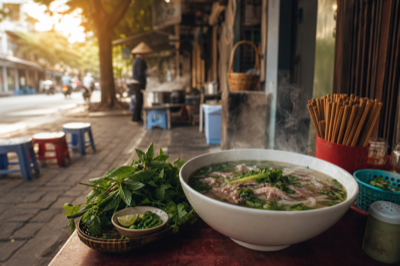
Pourquoi les Hanoïens mangent du Phở tôt le matin (et pourquoi vous devriez aussi)
À Hanoï, la journée ne commence pas par un café — elle commence par un bol de phở. Découvrez pourquoi les locaux mangent le phở tôt et comment vous pouvez en faire l'expérience.
Lire l'histoire complète →
Hanoi Walks · Vietnam · May 2026
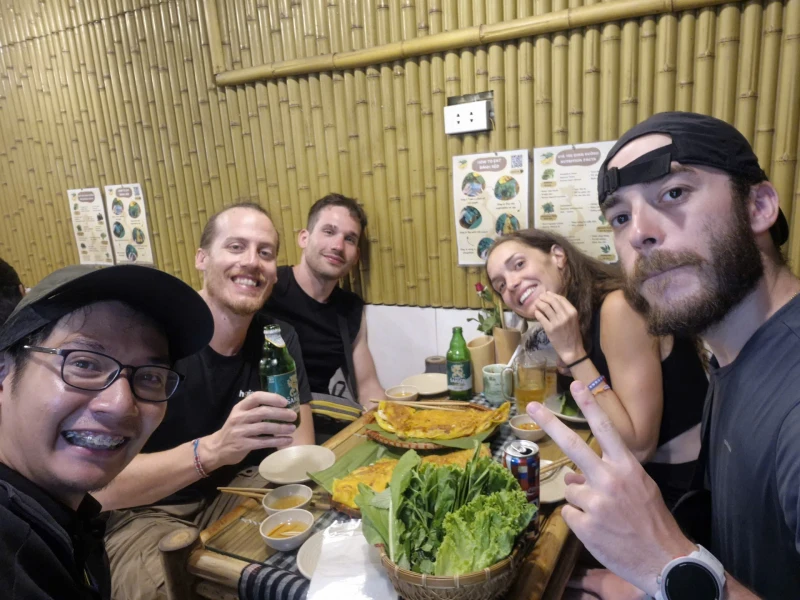
Meilleure street food du Vieux Quartier de Hanoï (Guide local 2026)
Découvrez la meilleure street food du Vieux Quartier de Hanoï, quoi manger, où aller et comment vivre Hanoï comme un local.
Lire l'histoire complète →
Hanoi Walks · Vietnam · May 2026
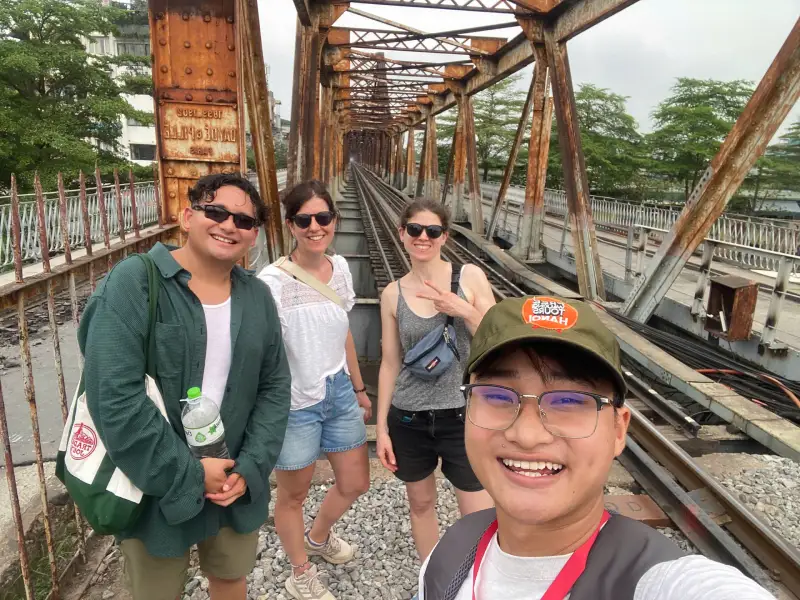
Visite privée à Hanoï (Ce que vous vivez vraiment)
Une visite privée à Hanoï ne se résume pas au prix — c'est une question de perspective. Voici ce que vous vivez vraiment.
Lire l'histoire complète →
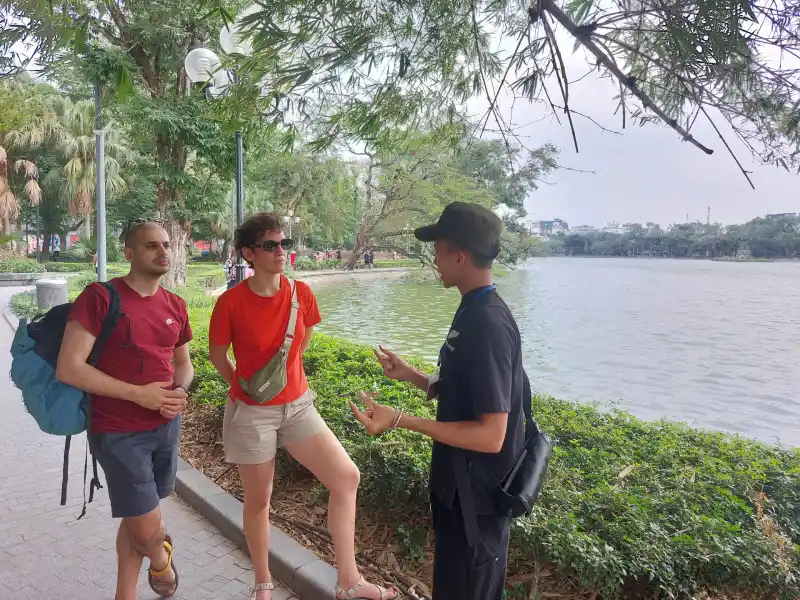
Hanoi Walks · Vietnam · July 2026
The Complete Hoan Kiem Lake Guide: Legend, Landmarks & How to Experience Hanoi's Heart
Your guide to Hoan Kiem Lake — Turtle Tower, Ngoc Son Temple, the returned sword legend, best visit times, and walking routes into the Old Quarter.
Lire l'histoire complète →Lieux associés
Old Quarter
Place guide to the Hanoi Old Quarter — where the 36 streets begin, what to see on foot, and which walking tours cover this neighbourhood. For planning articles, see the Old Quarter topic hub.
Explorer le lieuHoan Kiem Lake
Explore Hoan Kiem Lake — the symbolic heart of Hanoi, Ngoc Son Temple, and the gateway to the Old Quarter.
Explorer le lieuDong Xuan Market
Explore Dong Xuan Market — wholesale halls, street-food perimeter, and the commercial anchor of the Old Quarter.
Explorer le lieuLong Bien Bridge
Explore Long Bien Bridge — Gustave Eiffel's railway bridge, Red River views, and sunrise photography in Hanoi.
Explorer le lieuOld Quarter
Topic hub for Hanoi Old Quarter planning — curated guides on street food, markets, hidden alleys, and walking routes. Browse articles and connect to our place guide.
9 guides
Voir le thème →Visites associées
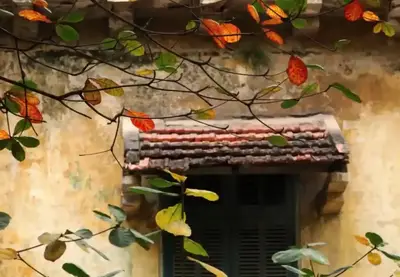
Visite à pied du Vieux Quartier de Hanoï
Marchés, ruelles et vie locale
C'est la visite du Vieux Quartier de Hanoï — axée sur les 36 rues, les marchés locaux, les ruelles cachées et le rythme quotidien du centre historique. Si vous cherchez l'architecture coloniale, l'Opéra et l'histoire de l'indépendance, choisissez plutôt notre visite distincte Histoire et Quartier Français. Entrez au cœur du Vieux Quartier et découvrez son histoire, sa culture et sa vie quotidienne à travers rues cachées, marchés locaux et monuments emblématiques. Cette visite à pied offre un aperçu authentique du passé et du présent de la ville, guidée par des histoires locales et des expériences réelles. Du monument symbolique des Héros Tombés au légendaire pont Long Biên, chaque étape révèle une facette différente de Hanoï — sa résilience, ses traditions et le rythme vibrant de la vie quotidienne.
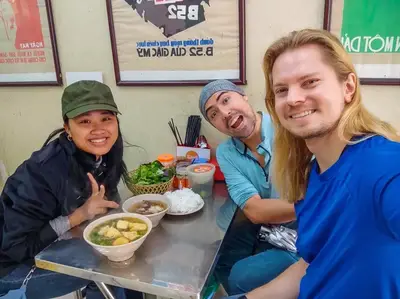
Visite à pied Street Food de Hanoï
Taste the real Hanoi
Goûtez les plats vietnamiens les plus célèbres, dont phở, bún chả, bánh mì et café aux œufs, en explorant le Vieux Quartier animé.