Hanoi Walks · Vietnam · July 2026
The Complete Temple of Literature Guide: Vietnam's First University & What to See
The Temple of Literature — *Văn Miếu – Quốc Tử Giám* — is where Vietnam honours Confucian learning and the scholars who passed imperial examinations. Founded in 1070 under the Ly dynasty, it predates most tourist landmarks in central Hanoi. While the Old Quarter thrums with motorbikes, the temple's five courtyards step down in deliberate quiet — stone stelae on turtle backs, lacquered pavilions, ginkgo shade, and the occasional school group reciting history in unison.
Visitors sometimes mistake it for a functioning Buddhist temple. It is primarily a Confucian scholarly memorial and former national university (*Quốc Tử Giám*, added 1076). That distinction shapes etiquette, what you photograph, and how much time to allow.
This guide covers history, courtyard-by-courtyard highlights, tickets and hours, pairing with Ba Dinh and West Lake, and how our Hanoi City Tour contextualises the site within a half-day geography west of Hoan Kiem.
See the Temple of Literature place guide and temples topic hub for related reading.
Historical Background: More Than a Photo Stop
Emperor Ly Thanh Tong ordered construction in 1070 to honour Confucius, sages, and scholarly virtue — aligning Dai Viet court culture with East Asian Confucian governance models. In 1076, the Imperial Academy (*Quốc Tử Giám*) became Vietnam's first national university, training sons of mandarins in classical texts, history, and moral philosophy.
For centuries, success in regional and capital examinations determined bureaucratic careers. The temple's stone stelae — erected from 1484 onward — record names, birthplaces, and achievements of doctors who passed the highest exams. Each stelae sits atop a stone turtle — symbol of longevity and literary endurance.
Colonial and modern wars damaged or neglected portions; restoration campaigns in the 20th and 21st centuries rebuilt gates and pavilions visitors see today. UNESCO recognition is often assumed by travelers; the site is nationally protected heritage — impressive without needing foreign validation.
Understanding examinations and mandarinate structure transforms a pretty courtyard walk into comprehension of how pre-modern Vietnam selected its ruling class.
Layout: Five Courtyards in Sequence
The temple follows axial Confucian campus design — progressive entry toward inner scholarly sanctum.
**First courtyard — Entrance gate:** Van Mieu Mon gate from Van Mieu Street. Ticket check here. Noise of Quoc Tu Giam Street traffic fades behind walls.
**Second courtyard — Great Middle Gate (Dai Trung Mon):** Opens toward Khue Van Pavilion — iconic red wooden structure with circular moon window, symbol of literary aspiration. Most famous photograph in the complex.
**Third courtyard — Well of Heavenly Clarity (Thien Quang Tinh):** Flanked by stelae gardens on left and right — 82 surviving stelae of an original 116. Read slowly; each is a roster of excellence from specific examination years.
**Fourth courtyard — Attainment of Talent gate (Dai Thanh Mon):** Leads to House of Ceremonies and altars to Confucius and four honoured sages.
**Fifth courtyard — Imperial Academy site:** Thai Hoc buildings reconstructed to illustrate teaching halls and dormitory life. Exhibits on Vietnamese education history.
Allow 60–90 minutes for thoughtful pacing; rushed 30-minute loops miss stelae detail.
What Not to Miss
**Khue Van Pavilion** — architectural symbol of Hanoi itself, appearing on souvenirs and institutional logos.
**Stelae of Doctors** — tactile connection to real individuals across five centuries. Guides on our city tour translate sample inscriptions.
**Altar pavilions** — active incense offerings; behave as in any sacred space.
**Thai Hoc exhibition halls** — context on Quốc Tử Giám daily life; air-conditioned relief in summer.
**Seasonal events** — calligraphy festivals and student honour ceremonies occasionally animate courtyards; check cultural calendars around Tet and autumn school openings.
Tickets, Hours & Practical Access
**Entry fee:** Modest ticket for foreign visitors (pricing subject to adjustment — carry cash in Vietnamese đồng). Vietnamese citizens often pay reduced rates.
**Hours:** Typically morning to late afternoon; closed certain national maintenance days. Not a sunrise or night site — plan daytime visit.
**Dress code:** Covered shoulders and knees; remove hats in altar halls. Scarves available for rent at some temple sites nationwide — carrying a light wrap is simpler.
**Accessibility:** Flat courtyards with some threshold steps at gates. Stelae gardens have uneven stone.
**Location:** 58 Quoc Tu Giam Street, Dong Da District — west of Hoan Kiem, distinct from Old Quarter walking distance psychology (20–30 minutes by taxi, longer on foot in heat).
Pair with Ho Chi Minh Mausoleum and Ba Dinh Square in one Ba Dinh morning — security and dress rules stricter at mausoleum.
How to Get There
**Grab/taxi:** Easiest from Old Quarter hotels — 10–20 minutes depending on traffic.
**Bus:** Several municipal lines stop near Van Mieu Street — cheap, slower, Vietnamese signage.
**Walking from West Lake:** Possible via Quan Thanh and Ba Dinh approach — 40+ minutes, better as structured tour route than ad hoc summer hike.
**Guided city tour:** Our Hanoi City Tour begins at Tran Quoc Pagoda, crosses West Lake geography, passes Ba Dinh exteriors, and concludes at Temple of Literature — linking lakes, politics, and scholarship in one narrative.
Hanoi City Tour
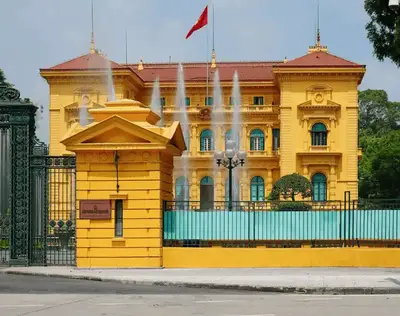
From West Lake to Ba Dinh Square
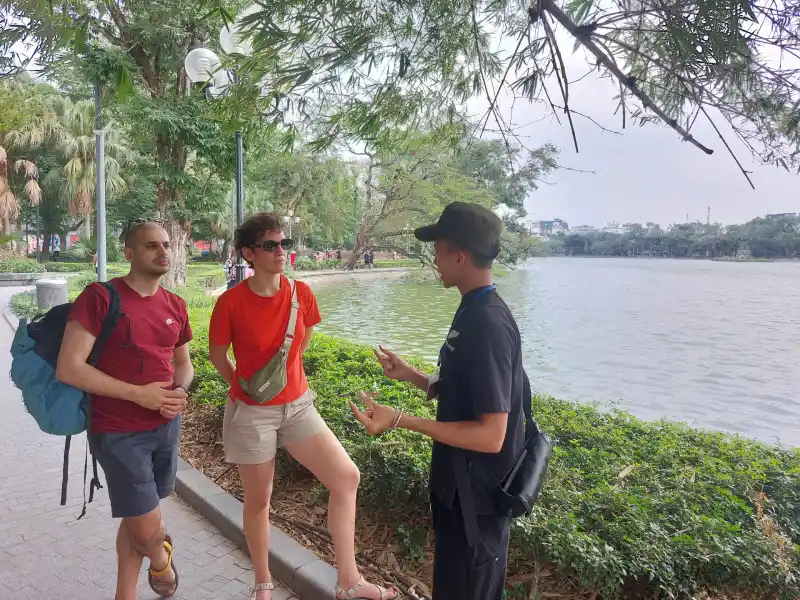
Discover a different side of Hanoi through its lakeside charm and political heart. This walking tour takes you from peaceful West Lake to Ba Dinh Square, combining history, culture, and modern Vietnam through meaningful landmarks and local stories. From the oldest pagoda in Hanoi to the political center of modern Vietnam, every stop reveals a different layer of the city — its spirituality, its resilience, its colonial past, and its contemporary identity. This is not just a sightseeing walk. It is a journey through the places that have shaped Vietnam's history and continue to define its future.
Combining With Other Ba Dinh & West Lake Sites
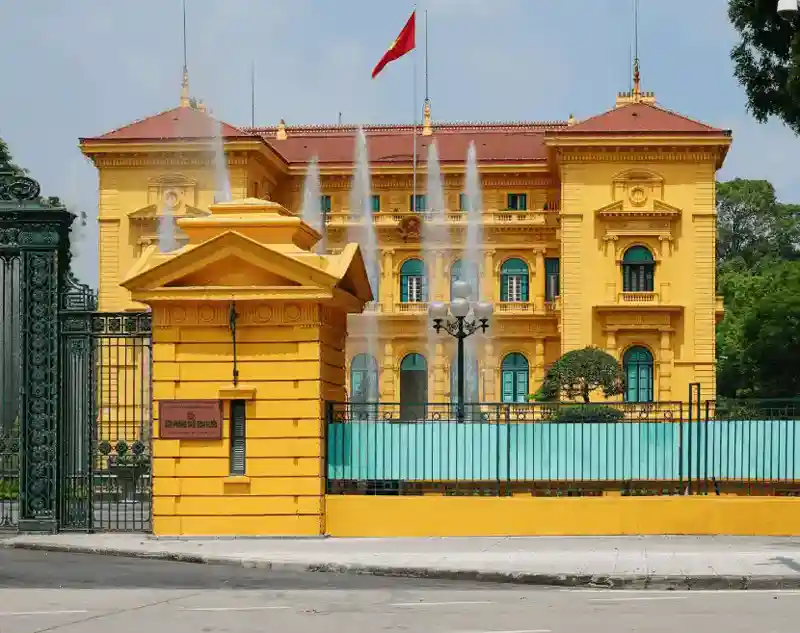
**Morning Ba Dinh cluster:** Mausoleum exterior (strict hours) → Presidential Palace gates → Temple of Literature → lunch toward West Lake.
**West Lake afternoon:** Tran Quoc Pagoda — oldest pagoda in Hanoi on a peninsula — pairs naturally with city tour start point.
**What to skip if tired:** Interior mausoleum queue can consume hours; many travelers choose exterior square plus temple instead.
Do not confuse this temple with **Ngoc Son Temple** on Hoan Kiem Lake — different tradition, scale, and geography.
Etiquette & Visitor Behaviour
Speak quietly in altar zones. Do not climb turtles bearing stelae — erosion and respect both matter. School groups take priority in exhibition halls during term time. Photography generally allowed outdoors; check signs indoors.
Guides and signage increasingly use Vietnamese and English; classical inscriptions remain in Chinese characters — historical literacy, not political statement for visitors to debate on site.
Our culture topic expands on Confucian values in contemporary Vietnamese education pride — graduation photos at Khue Van Pavilion remain a rite for local students.
Best Time to Visit
**Weekday mornings** — fewest tour buses, softer light on stelae.
**Avoid** midday summer heat in unshaded third courtyard.
**Tet and peak domestic tourism** — beautiful decorations, heavier queues.
Autumn (September–November) historically pleasant — see seasonal Hanoi and best time to visit for climate framing.
Street Food & Cafés Nearby
The temple street itself is not food destination — student-priced cafés and phở shops appear on side streets toward Dong Da. Serious street food remains Old Quarter territory. Plan lunch west toward West Lake waterfront restaurants or return east to guild streets.
Photography Tips
Khue Van Pavilion: centre axis through moon gate. Stelae rows: side angle to show turtle bases. Wide courtyard shots need patience for school group clearance. Tripods occasionally restricted in congested gates — handhold in crowds.
Why a Guide Helps Here
Signage explains layout; guides connect examinations to modern Vietnamese education pride and explain stelae characters, turtle symbolism, and which courtyards are reconstruction versus original footing. Our city tour treats the temple as culmination — not isolated ticket stop — after West Lake and Ba Dinh narrative buildup.
Hanoi City Tour
From West Lake to Ba Dinh Square
Discover a different side of Hanoi through its lakeside charm and political heart. This walking tour takes you from peaceful West Lake to Ba Dinh Square, combining history, culture, and modern Vietnam through meaningful landmarks and local stories. From the oldest pagoda in Hanoi to the political center of modern Vietnam, every stop reveals a different layer of the city — its spirituality, its resilience, its colonial past, and its contemporary identity. This is not just a sightseeing walk. It is a journey through the places that have shaped Vietnam's history and continue to define its future.
Independent visitors succeed with this guide plus 90 quiet minutes. First-time Hanoi travelers short on historical context gain disproportionately from guided interpretation.
Broader Itinerary Links
- 2 days in Hanoi — where temple day fits - French Quarter guide — colonial day separate from Ba Dinh - History topic — imperial and modern layers - Museums topic — if you prefer exhibit-heavy days - Planning hub — tickets, SIM, transport basics
Imperial Examinations Explained
Pre-modern Vietnamese bureaucracy recruited through competitive examinations modelled on Chinese Confucian tradition — but Vietnamese candidates faced their own linguistic and regional politics.
**Regional exams** filtered talent at provincial level; **capital exams** in Thang Long determined national ranking. Top graduates received *hoang giáp*, *hoang bang*, and *tam giáp* distinctions — tiers recorded on turtle stelae.
**Subjects** included classical texts, poetry composition, policy essays demonstrating moral reasoning. Memorisation plus rhetorical skill, not STEM as modern students imagine.
**Failure** meant years of retry — entire careers waited on examination cycles. Stress legends persist in Vietnamese popular culture.
**Women** were excluded from imperial exams — gender limitation worth acknowledging when celebrating heritage today.
Guides on our city tour translate sample stelae entries so names become people, not decorative carving.
Restoration & Archaeology: What Is Original?
War damage, weather erosion, and colonial neglect required multiple restoration waves. Khue Van Pavilion and several gates are well-documented reconstructions faithful to historical drawings — not fake heritage, but not every stone is 11th-century original either.
Archaeological digs occasionally uncover foundations near Van Mieu Street — school expansion projects reveal older strata. Interpretation signage updates slowly; guides supplement with current scholarship.
Ask explicitly what is Ly dynasty footing versus Nguyen restoration versus 20th-century rebuild — honest heritage tourism starts with that transparency.
Student Culture & Graduation Photography
Modern Vietnamese students treat Khue Van Pavilion as backdrop for graduation albums — ao dai, diploma props, friend group choreography. Tourists photographing students should ask permission — these are personal milestones, not street theatre.
Confucian reverence for education persists in family investment in tutoring, university entrance exam pressure (*ky thi tot nghiep*), and national pride when Vietnamese students excel internationally. Temple visit connects ancient selection mechanism to contemporary anxiety about merit — surprisingly emotional for parents visiting with teenagers.
Nearby Dining & Quiet Corners
Van Mieu Street hosts student-budget eateries — com binh duong (rice buffet), fruit smoothies, copy shops. Few tourist menus; point-and-eat works with phrasebook or translation app.
**Van Lake** (small pond south of temple) offers quieter bench time than Hoan Kiem — locals read here between classes.
**Dong Da Park** adjacent — morning exercise alternative if you stay overnight in Ba Dinh district hotels.
Temple vs Museum Mindset
Move slowly. Whisper in altars. Allow incense smell to register — sensory memory anchors better than quick phone scroll. Read one full stelae translation panel. Sit on provided bench in fourth courtyard and watch school groups flow — future doctors and engineers meeting their imperial predecessors' shadows.
If you only want iconic gate photos, 20 minutes suffice — but you will have visited a label, not a university that shaped a civilisation.
Ba Dinh Morning Logistics (Detailed)
**Mausoleum first or temple first?** Queue-dependent. Mausoleum lines form at dawn on open days; temple opens later with steadier flow. Guides monitor same-day WhatsApp groups from guards and drivers.
**Bag storage:** Mausoleum prohibits bags inside — plan locker or hotel drop. Temple allows small bags.
**Dress transition:** Same modest clothing serves both — carry sleeves rather than renting at each gate.
**Official events:** National assembly dates can close squares unexpectedly — flexible itinerary essential.
Sample Temple + Ba Dinh Morning
**6:30 a.m.** — Taxi to mausoleum queue if interior viewing is priority.
**8:30 a.m.** — Presidential Palace exterior photos from approved pavement angles.
**9:30 a.m.** — Temple of Literature entry at opening calm.
**11:00 a.m.** — Stelae gardens and Thai Hoc exhibits unhurried.
**12:30 p.m.** — Lunch toward West Lake or return Old Quarter via Grab.
Afternoon optional: Tran Quoc Pagoda if not done on separate city tour day.
Confucian Values in Contemporary Vietnam
Temple visits land better when you grasp continuing respect for study, filial piety, and meritocratic ideals — modified but not erased by socialist modernity. National Teacher's Day (November 20) brings flowers to educators nationwide; exam season stress sends families to temples for incense luck.
Vietnamese students studying abroad still visit Van Mieu on homecoming trips — diaspora Instagram at Khue Van Pavilion signals identity, not mere tourism.
Souvenirs & Calligraphy Stalls
Temple gates host calligraphy vendors during festivals — red paper blessings, custom couplets, brush demonstrations. Purchases support craft tradition; haggle gently. Avoid blocking pedestrian flow while watching artists work — step aside between strokes.
**Bookshops** on Quoc Tu Giam Street sell Vietnamese-English history paperbacks — better depth than airport souvenir summaries.
Accessibility for English-Only Readers
Stelae inscriptions remain classical Chinese — translations on adjacent panels increasing but incomplete. Audio guides sporadic — human guide or this article's courtyard primer compensates. Our city tour guides sample one stelae story in full narrative form so pattern recognition kicks in for remaining rows.
Pairing Temple Visit With West Lake Afternoon
After morning Van Mieu, West Lake offers scale contrast — 15-minute taxi. Walk Tran Quoc peninsula, lakeside phở, slower sunset than Hoan Kiem. Too much for exhausted legs — split across two days; our 2 days in Hanoi itinerary separates Ba Dinh morning from optional West Lake afternoon deliberately.
**West Lake water** larger, breezier — residential photographers favour golden hour here over lake-centre crowds.
Ticket Queue & Holiday Crowd Calendar
**October and November** weekends swell with domestic school groups — arrive opening minute or accept courtyard congestion. **Tet** week mixes decoration beauty with peak queue stress. **Monday** slightly calmer than Sunday family outings in our field observation 2025–2026.
Night Versus Day Temple Atmosphere
Van Mieu closes before dark — unlike Hoan Kiem weekend lights. Plan daytime exclusively. Morning incense haze photographs better than harsh noon white sky. Cloudy diffusion flatters red Khue Van paint — weather app check worthwhile.
Scholar Stones & Rubbing Traditions
Visitors occasionally attempt stone rubbings on turtles — prohibited where signage forbids touch to protect heritage surfaces. Digital photograph instead. Gift shops sell authorised replica rubbings — support preservation funding rather than direct stelae contact.
Why Guides Quote Confucius Sparingly
Analects references enrich interpretation when accurate — misquoted Instagram philosophy cheapens site gravitas. Our city tour cites specific examination texts mirrored on stelae, not random fortune-cookie Confucius.
Mobility Scooter & Wheelchair Notes Revisited
Third courtyard stelae paths uneven — wheelchair users may preview first two courtyards then exit via staff guidance if wheels risk turtle base edges. Mobility scooters increasingly common among Vietnamese elderly visitors — patience in narrow gates shared cultural value.
Reading List Before You Visit
*Hanoi's Old Quarter: 36 Streets* heritage pamphlets at temple gift desk — slim but accurate courtyard map. Wikipedia Van Mieu article solid overview — cross-check dates with our guide. Fiction: *The Mountains Sing* contextualises modern Vietnamese education pride versus imperial examination past indirectly.
Allow ninety quiet minutes minimum — rushing Khue Van photos alone wastes ticket value and disrespects scholars honoured on stelae you skip.
Photography inside Thai Hoc halls may restrict flash — observe signs; painted exhibits fade under tourist strobes.
Final Thoughts
The Temple of Literature rewards slow reading — of courtyards, turtles, names carved in stone, students posing in modern ao dai where mandarins once studied. It is not the loudest Hanoi experience. That is the point.
Give it a morning. Dress respectfully. Read at least one full stelae translation. Then walk west toward the lake and feel how deliberately Hanoi separates scholarship from motorbike noise — a boundary the city has maintained for nearly a thousand years.
About this guide
- Experience
- Hanoi Walks city tour guides conclude real weekly routes at Van Mieu — we time arrivals to avoid school-trip peaks where possible and translate stelae samples guests ask about. Team members visit for their own children's graduation photos, understanding the site as living cultural space, not frozen monument. Entry fee and hour guidance in this article reflects checks made at the gate in 2026; we update WhatsApp advice when Dong Da road works affect taxi drop-off points.
- Expertise
- Historical narrative aligns with mainstream Vietnamese heritage publications on Ly dynasty foundation, Quoc Tu Giam academy function, and stelae chronology from 1484. We accurately describe turtle–stelae symbolism and Confucian versus Buddhist site differences — a common traveler confusion. Courtyard naming follows on-site bilingual signage. We do not claim UNESCO World Heritage status the temple does not hold; we describe national heritage protection accurately.
- Authority
- Temple of Literature is a documented culmination stop on our published Hanoi City Tour itinerary — consistent across tour page, meeting instructions, and guest reviews. Our temples topic hub and place guide cross-link to this pillar without contradictory hour or dress advice. Ba Dinh geography in our editorial system treats the temple as the scholarly anchor west of Hoan Kiem — matching how guidebooks and municipal tourism maps zone the city.
- Trust
- Ticket prices and hours are flagged as subject to change — we avoid false precision. We distinguish entry responsibility on city tour (guest pays temple ticket where not included) clearly on booking pages and here. No affiliate museum passes promoted. Recommendations to pair with mausoleum include security and dress realities, not oversold 'must-see' hype. Independent visitors receive the same courtyard sequence guides use professionally.
Frequently asked questions
How long do you need at the Temple of Literature?
Plan 60 to 90 minutes for all five courtyards, stelae gardens, and Thai Hoc exhibits. History enthusiasts may stay two hours. Rushed 30-minute visits typically cover only Khue Van Pavilion photos without stelae or altar context.
What is the dress code for the Temple of Literature?
Cover shoulders and knees in all courtyard and altar areas. Remove hats when entering ceremonial halls. Light scarves work if you are wearing summer tank tops — carry one proactively rather than relying on rental availability.
Is the Temple of Literature the same as Ngoc Son Temple?
No. The Temple of Literature (Van Mieu – Quoc Tu Giam) is a Confucian scholarly memorial west of the Old Quarter. Ngoc Son Temple sits on an island in Hoan Kiem Lake and honours military and literary figures in a smaller lakefront shrine. Different history, dress norms, and ticket processes.
Can I visit the Temple of Literature and Ho Chi Minh Mausoleum on the same day?
Yes — both lie in the Ba Dinh area. Mausoleum access has strict hours, dress codes, and occasional closure; start early with mausoleum queue timing, then walk or taxi to Van Mieu Street for the temple. Our Hanoi City Tour structures this geography with a guide tracking current mausoleum rules.
How much does Temple of Literature entry cost?
Foreign visitor tickets are inexpensive by international museum standards — typically payable in cash Vietnamese đồng at the gate. Pricing can change; carry small notes. The site is not free, unlike exterior-only government squares nearby.
What tour includes the Temple of Literature?
Our Hanoi City Tour concludes at the Temple of Literature after West Lake, Tran Quoc Pagoda, and Ba Dinh exterior landmarks. It is a walking tour with entry fees noted as guest responsibility where applicable. Old Quarter and French Quarter tours do not replace this Ba Dinh–West Lake geography.
Related Stories
Related Places
Temples
Guides to Hanoi's temples and pagodas — Ngoc Son, Tran Quoc, Temple of Literature, and etiquette for visitors.
2 guides
Read topic →Related Tours
Hanoi City Tour
From West Lake to Ba Dinh Square
Discover a different side of Hanoi through its lakeside charm and political heart. This walking tour takes you from peaceful West Lake to Ba Dinh Square, combining history, culture, and modern Vietnam through meaningful landmarks and local stories. From the oldest pagoda in Hanoi to the political center of modern Vietnam, every stop reveals a different layer of the city — its spirituality, its resilience, its colonial past, and its contemporary identity. This is not just a sightseeing walk. It is a journey through the places that have shaped Vietnam's history and continue to define its future.
Hanoi Old Quarter Walking Tour
Markets, alleys, and local life
This is Hanoi's Old Quarter walk — focused on the 36 streets, local markets, hidden alleys, and the everyday rhythm of historic Hanoi. If you want colonial architecture, the Opera House, and independence-era history, choose our separate History & French Quarter Walking Tour instead. Step into the heart of the Old Quarter and experience its history, culture, and daily life through hidden streets, local markets, and iconic landmarks. This walking tour offers an authentic glimpse into the city's past and present, guided by local stories and real experiences. From the symbolic Fallen Heroes Monument to the historic Long Bien Bridge, every stop reveals a different layer of Hanoi — its resilience, its traditions, and its vibrant everyday rhythm.