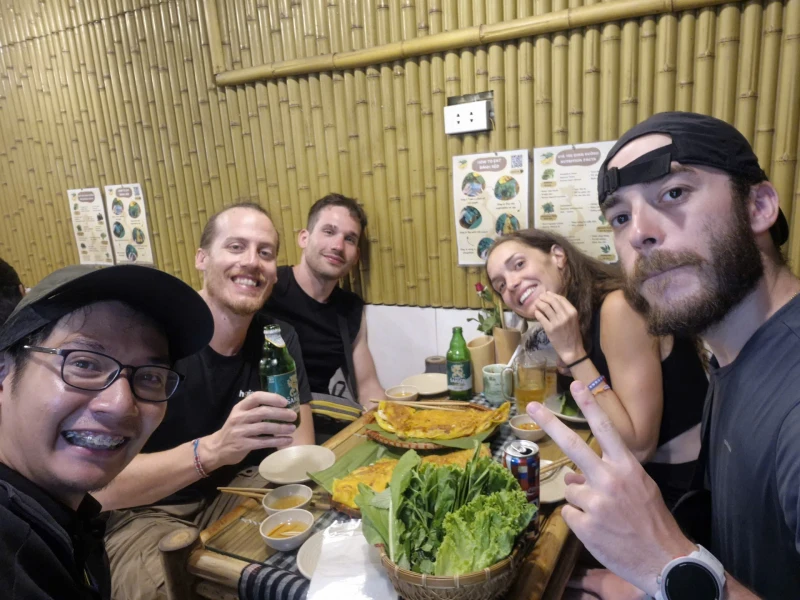
Hanoi Walks · Vietnam · July 2026
The Complete Hanoi Street Food Guide: What to Eat, When Locals Eat It, and How to Find the Real Thing
Hanoi does not treat street food as a novelty. It is infrastructure — the way millions of people eat breakfast before work, grab lunch between errands, and wind down over a beer and grilled skewers after dark. If you arrive expecting a curated "food scene" with tasting menus and reservation apps, you will miss the point entirely. The city's best meals happen on plastic stools, under fluorescent light or open sky, with motorbikes threading past your elbow.
This guide is written for travelers who want to eat well without guessing — and who understand that the difference between a memorable bowl of phở and a forgettable one often comes down to timing, neighbourhood, and knowing what to order when. Our guides lead street food walking tours through the Old Quarter every week. What follows is the framework we share with guests before we even sit down at the first stall.
Why Hanoi Street Food Is Different From Saigon — or Bangkok
Northern Vietnamese cooking is subtler than southern versions. Broths run clearer, herbs are used with restraint, and dishes tend toward balance rather than sweetness or heat for their own sake. Hanoi phở is famously minimalist compared to Ho Chi Minh City's richer, sweeter bowls. Bún chả — grilled pork with dipping sauce and noodles — is a Hanoi invention, not a pan-Vietnamese staple. Even bánh mì here skews simpler: a shorter baguette, less mayonnaise, more pâté and pickle.
That regional identity matters when you read online lists that treat "Vietnamese food" as one cuisine. In Hanoi, eating on the street means eating like a Hanoian — which is why we recommend starting with our dedicated article on morning phở rituals before branching into heavier lunch dishes. The rhythm of the day shapes what is fresh, what is sold out, and what vendors are actually proud to serve.
The Daily Eating Rhythm: Match Your Appetite to the Clock
Street food in Hanoi follows a clock that tourists often ignore — and ignoring it is the fastest way to eat mediocre food at the wrong hour.
**Before 9am:** Phở, bánh cuốn (steamed rice rolls), xôi (sticky rice), and cháo (rice porridge) dominate. Vendors who sell these dishes prepare overnight; by mid-morning many close. If you sleep until ten and then hunt for phở, you may find only second-tier pots kept warm too long.
**10am–2pm:** Bún chả, bún riêu (crab noodle soup), and cơm tấm-style rice plates appear. Noodle soups shift toward heartier broths. This is also when office workers flood sidewalk cơm (rice) stalls — follow the lunch rush.
**3pm–6pm:** Snack time — bánh gối (fried dumplings), nem rán (spring rolls), and fresh nộm (fruit and herb salads). Egg coffee fits perfectly in this window, between lunch fatigue and evening appetite.
**After 6pm:** Grilled meats, lẩu (hot pot) streets, bia hơi corners, and chè (sweet dessert soups). The Old Quarter transforms; see our companion piece on best street food in the Old Quarter for dish-specific addresses.
Understanding this rhythm is more valuable than any single restaurant recommendation — because the best stall today may be closed tomorrow if the vendor rests, and because freshness is non-negotiable in a city without refrigeration trucks on every corner.
Essential Dishes: What to Order and What You Are Actually Eating
Phở bò and phở gà
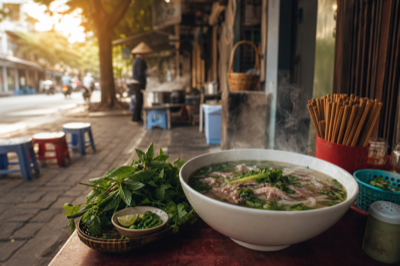
Phở is rice noodle soup — but in Hanoi the distinction between beef (bò) and chicken (gà) versions is worth knowing. Beef phở uses a clear star-anise-and-charred-onion broth; chicken phở is lighter, often preferred in summer. Order tái (rare beef slices) or nạm (flank) for texture contrast. Add rau thơm (herbs), giá (bean sprouts), and a squeeze of lime — but taste the broth first. Locals rarely drown phở in sauce on the first spoonful.
We devote an entire article to why locals eat phở early. The short version: overnight broth peaks at dawn. Arrive before 8am near Dong Xuan Market or along Hàng Bông and you will understand why.
Bún chả
Barbecued pork patties and sliced belly, served with a vinegary dipping sauce, rice vermicelli, and a basket of herbs. This is the dish Anthony Bourdain shared with Barack Obama at Bún Chả Hương Liên — which, yes, draws queues, but excellent bún chả exists on anonymous corners throughout the Old Quarter. Look for charcoal smoke and a steady local clientele, not English menus photographed for Instagram.
Bánh mì
The Hanoi baguette sandwich is a colonial legacy refined by Vietnamese hands. Classic fillings: pâté, chả lụa (Vietnamese ham), pickled daikon and carrot, cucumber, coriander, and chili. Banh mi makes an ideal walking lunch while exploring Hoan Kiem Lake — buy one, eat it within five minutes, move on.
Bún riêu and bún thang
Bún riêu combines tomato broth with crab paste, fried tofu, and blood cake — richer and more polarizing than phở. Bún thang is the opposite: an elegant, multi-ingredient chicken broth served with shredded chicken, egg crepe strips, and mushrooms. Both reward adventurous eaters who have already mastered the basics.
Chả cá Lã Vọng and grilled specialities
Chả cá — turmeric-marinated fish grilled at the table — is a sit-down dish more than a sidewalk snack, but street-side grilling culture surrounds it. Follow smoke. Grilled nem (sausage), sườn nướng (pork ribs), and ốc (snails) dominate evening streets near Beer Street.
Egg coffee (cà phê trứng)
Not street food in the strictest sense — but no Hanoi food guide is complete without it. Invented at Giảng Café in the 1940s, egg coffee is robusta espresso topped with whipped egg yolk and condensed milk. Drink it mid-morning after phở. Our Hanoi coffee guide goes deep on café culture; here, note that egg coffee is a palate reset between savoury courses.
Where to Eat: Geography Matters More Than Rankings
Hanoi's street food map clusters by neighbourhood. Chasing a single "best" address across town wastes time you could spend eating twice.
**Old Quarter (Hoàn Kiếm):** Highest density, highest tourist exposure. Excellent food exists here — but so do diluted versions for passers-by who will never return. Prefer stalls where Vietnamese is the only language spoken and where dishes are limited (a phở shop sells phở; it does not also sell pizza). Our Old Quarter place guide maps the 36-street logic that helps you orient.
**West of the lake / French Quarter fringe:** Slightly calmer, still walkable. Good for bún chả lunches and coffee stops on Coffee Street lanes.
**Near Dong Xuan:** Wholesale energy in the morning; food stalls on the market perimeter serve workers who need speed and value. Go early.
**Train Street and hidden alleys:** Residential lanes hide family kitchens — best explored with a guide who knows which courtyards welcome visitors. See hidden gems in Hanoi for context on ngõ culture.
Do not assume that distance from the lake equals authenticity. Some of the city's best bún chả sits on busy main roads precisely because locals drive there. The signal you want is turnover: plates cleared quickly, ingredients prepped in front of you, and a menu small enough that the vendor can master it.
How to Eat Safely — Without Paranoia
Travel forums swing between reckless abandon and sterile hotel dining. Neither extreme serves you well in Hanoi.
**Choose busy stalls.** High volume means high turnover. A quiet phở shop at noon is a red flag.
**Watch the water.** Ice at established cafés and chain-style drink shops is generally fine; at obscure fruit shake carts, skip ice if you have a sensitive stomach.
**Peel and cook.** Fresh herbs are part of the experience — wash them in the tableside broth or hot tea if you worry. Avoid raw vegetables at empty stalls.
**Trust your nose.** Rancid oil announces itself. Fresh grilling smells like charcoal and lemongrass, not chemical sweetness.
**Start mild.** Work up to fermented shrimp paste (mắm tôm) and strong nước chấm after your stomach adjusts to local bacteria — usually two days for most travelers.
Our street food walking tour selects vendors we eat at weekly — family operations with consistent hygiene and recipes unchanged for decades. That is not a guarantee against all discomfort, but it removes the guesswork that causes most food-travel regrets.
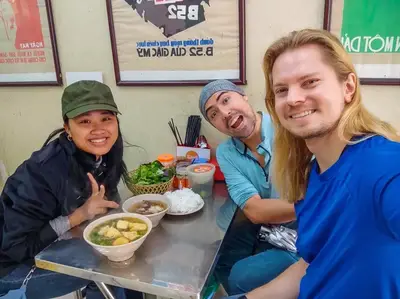
Streetfood-Rundgang durch Hanoi
Taste the real Hanoi
Probieren Sie Vietnams bekannteste Gerichte wie Phở, Bún Chả, Bánh Mì und Eierkaffee bei einem Spaziergang durch die lebendige Altstadt.
Etiquette on the Sidewalk: Small Rules That Earn Respect
Street eating in Hanoi is communal but not chaotic. A few norms help you blend in.
Sit when offered a stool — standing over a bowl blocks the sidewalk. Do not expect Western service; payment is often at the end, cash only. Take photos of food freely; ask before photographing people's faces. Slurping noodles is normal. Tipping is not expected at street stalls, though rounding up 10,000 VND is appreciated at places where you linger.
When a stall is full, wait patiently rather than hovering over someone's shoulder. Vietnamese diners share tables with strangers routinely — if someone gestures to an empty seat, accept it. Declining because you want privacy is fine at cafés; at phở counters during rush hour, flexibility is part of the contract.
Street Food and Walking Tours: Why a Guide Changes the Meal
You can eat well alone in Hanoi. Many travelers do. But the gap between "good" and "this changed how I understand Vietnam" often comes from context — knowing that the woman ladling broth inherited the recipe from her mother-in-law, that the alley you just entered was a silk guild street, that the dipping sauce ratio differs in Hanoi versus Huế.
Our team holds Travelers' Choice recognition for the same standards we bring to private food walks. We do not accept commission from vendors; stops are where we genuinely eat. If you are choosing between a random food list and a structured experience, read what makes the best walking tour in Hanoi — food-focused routes are one of six distinct tour types, each with different geography and pacing.
Budget Reality: What Street Food Actually Costs
Hanoi remains one of Asia's great food values. As of 2026, expect roughly:
- Phở: 40,000–65,000 VND ($1.50–$2.50) - Bún chả plate: 50,000–80,000 VND - Bánh mì: 25,000–40,000 VND - Egg coffee: 30,000–45,000 VND - Beer (bia hơi): 10,000–15,000 VND per glass
A generous morning-to-evening food day under $15 USD is achievable without sacrifice. Tourist-facing restaurants in the Old Quarter may charge triple for inferior versions — another reason to eat where locals eat.
Seasonal Adjustments: Heat, Rain, and Tet
Summer (June–August) pushes locals toward lighter soups and more iced coffee; stamina for midday walking drops. Schedule heavy eating for morning and evening. Our best time to visit Hanoi guide covers weather month by month.
Rain does not stop street food — vendors deploy awnings and plastic sheeting. Some of the best atmospheric eating happens during warm drizzle when steam mixes with rain mist.
Tet (Lunar New Year) closes many family stalls for days. Book food experiences before or after Tet if street eating is central to your trip — not during the holiday itself.
Building Your Own Food Day: A Sample Route
**6:30am:** Phở near the lake. Walk the quiet shore of Hoan Kiem while digesting.
**9:00am:** Egg coffee on a Coffee Street lane. Sit low, watch the city accelerate.
**11:30am:** Bún chả — this is the canonical lunch window.
**3:00pm:** Snack — bánh gối or fruit nộm from a cart.
**6:30pm:** Evening grill or a guided extension into night markets and bia hơi.
That sequence respects freshness, avoids heat exhaustion, and covers Hanoi’s core flavour vocabulary in one day. For a compressed version inside a broader trip, see 2 days in Hanoi.
Common Mistakes Travelers Make
**Eating phở at lunch.** Possible, but not optimal. Morning broth is the point.
**Ordering everything at once.** Vietnamese meals are sequential. One dish per stop keeps portions manageable.
**Staying only on Hàng Buồm and Ta Hien.** Those streets are fun at night but tourist-heavy for food quality.
**Ignoring side sauces.** Nước chấm, mắm tôm, and chili vinegar are not optional extras — they complete the dish.
**Skipping street food because of "hygiene anxiety"** while eating stale hotel buffet — the irony is lost on no one who lives here.
Connecting Food to the Rest of Your Trip
Street food is not an isolated activity. It anchors neighbourhood walks, market mornings, and night tours. Pair a food morning with an Old Quarter walking tour for geography. Follow a French Quarter history walk with a contrasting lunch — colonial boulevards to plastic stools in twenty minutes.
If you have only two days, food should be woven through both days rather than siloed into one "food night." Hanoi rewards repetition: the same stall on day two often earns trust — and a second bowl tastes better once you know how to order.
Final Thoughts: Eat Slowly, Walk Between Bites
Hanoi street food resists checklist tourism. The best strategy is not to "hit" twenty dishes but to understand five deeply — phở, bún chả, bánh mì, egg coffee, and one adventurous choice (bún riêu, ốc, or chả cá). Walk between meals. Let the city’s pace dictate yours.
When you are ready to stop guessing, our guides are one message away — same team, same stalls, same stools we have used for years. Until then, sit down wherever locals outnumber tourists, order what they order, and taste the capital one bowl at a time.
Deeper Dive: Regional Ingredients That Define Hanoi Flavour
Fish sauce (nước mắm) from Phú Quốc or Phan Thiết anchors dipping sauces — not interchangeable with soy sauce despite what confused travelers assume. Shrimp paste (mắm tôm) appears in bún riêu and some bún chả variants; its ammonia sharpness mellows when stirred into hot broth. Fresh herbs — rau răm, húng quế, tía tô — are not garnish but structural flavour; vendors judge foreigners who leave them untouched.
Rice noodles differ by width and cut: bánh phở flat for soup, bún round for dipping dishes, bánh hỏi thin woven mats for grilled meats. Understanding noodle vocabulary prevents ordering the wrong texture for the sauce you receive.
Vegetarian and Dietary Navigation
Dedicated vegetarian street food exists near Buddhist temples and on certain lunar calendar days when many Hanoians eat chay. Look for signs reading "đồ chay" or yellow Buddhist flags. Tofu in cháo, mushroom nem, and peanut-based sauces offer entry points. Gluten-sensitive travelers fare better with rice-noodle dishes than bánh mì — communicate "không bột mì" where possible.
Pairing Street Food With Our Tour Portfolio
Beyond the dedicated food tour, history walks pass food opportunities — French Quarter tours end near bún chả corridors; Old Quarter tours pause at phở counters; night tours integrate bia hơi and grilled skewers. Read best walking tour Hanoi to match tour type with appetite. Private customization lets you weight food at 70% of route if that is your priority — tell us at booking.
Historical Context: Street Food as Urban Survival
Colonial Hanoi, wartime shortages, and đổi mới economic opening each shaped today's sidewalk economy. Tube-house kitchens spilling onto streets maximized space; family recipes became micro-businesses when state employment could not absorb all workers. Eating street food is therefore economic anthropology — not poverty tourism, but respect for entrepreneurship that feeds a capital.
Packing List for Serious Street Eaters
Hand sanitiser (use discreetly), tissues (many stalls lack napkins), cash in small notes, lightweight rain jacket for sudden showers, and an empty stomach. Leave rigid meal schedules at home — Hanoi rewards flexibility when you smell something perfect three hours before planned lunch.
Street Food Glossary: Quick Reference
**Phở** — flat rice noodle soup, beef or chicken. **Bún** — round rice vermicelli, often served separate from broth for dipping. **Chả** — patty or sausage (pork, crab, or fish). **Nem** — fried spring roll. **Nộm** — salad, often green papaya. **Ốc** — snails, evening specialty. **Bia hơi** — fresh draft beer, pennies per glass. **Trà đá** — iced tea, free at many stalls. Learning these six words covers eighty percent of sidewalk menus.
How Our Guides Handle Allergies and Preferences
Private food tours accept advance notes — shellfish allergy, no pork, low spice. Street stalls cannot always guarantee cross-contamination; guides know which vendors cook single-protein pots versus mixed grills. Vegetarians should book explicit chay routes rather than hoping to improvise mid-walk.
Evening Street Food Progression
Start with grilled nem on a corner, progress to snail alley if adventurous, pause for sugarcane juice, finish with chè dessert soup — three-hour arc that mirrors how Hanoians socialise after work. Night markets near weekend lake zones add carnival energy without leaving central geography.
Why Commission-Free Guiding Matters for Food Integrity
Some city tours earn kickbacks from restaurants that pay per head — menus inflate, quality drops, authenticity dies. Hanoi Walks accepts no vendor commission on food tours; if we sit somewhere, it is because we eat there on days off. That policy costs revenue short-term and earns trust long-term — repeat guests and referral bookings validate the model annually.
Häufig gestellte Fragen
Is Hanoi street food safe for tourists?
Yes, when you choose busy stalls with high turnover — especially places where locals are eating. Avoid empty vendors at odd hours, and let your stomach adjust over the first two days. Our street food walking tour uses vendors we eat at weekly, which removes most guesswork without insulating you from authentic sidewalk dining.
What is the best time of day for street food in Hanoi?
Morning (6–9am) for phở and bánh cuốn; late morning to early afternoon for bún chả and rice plates; late afternoon for snacks; evening for grilled meats and bia hơi. Matching dish to clock matters more than any single address recommendation.
How much should I budget for a full day of street food?
Most travelers spend $10–15 USD for three substantial meals plus coffee and snacks. Individual dishes typically cost $1.50–$3. Beer and desserts add little. Tourist-facing restaurants charge far more for worse versions of the same dishes.
Do I need to speak Vietnamese to order street food?
Pointing works at phở and bánh mì stalls with fixed menus. For varied vendors, learn basic phrases — 'một phần' (one portion), 'không hành' (no spring onion) — or join a guided food walk where your guide orders and explains each dish.
What should I try first if I have never eaten Vietnamese street food?
Start with morning phở, then egg coffee, then bún chả for lunch. These three dishes define Hanoi’s flavour vocabulary and are widely tolerated by Western palates before you move toward fermented sauces or snail dishes.
Can vegetarians eat well on Hanoi streets?
Possible but limited. Look for bánh mì chay, đậu phụ (tofu) in cháo, and Buddhist vegetarian stalls near temples. Dedicated vegetarian street food is less common than in Ho Chi Minh City — tell your guide dietary needs in advance if booking a private food tour.
Möchten Sie Ihre eigene Geschichte schreiben?
Buchen Sie eine Stadtführung und erleben Sie das echte Hanoi.
Über WhatsApp buchenVerwandte Geschichten
Hanoi Walks · Vietnam · March 2026
Warum die Einheimischen in Hanoi früh morgens Phở essen (und warum Sie es auch tun sollten)
In Hanoi beginnt der Tag nicht mit Kaffee — er beginnt mit einer Schüssel Phở. Erfahren Sie, warum Einheimische früh Phở essen und wie Sie es erleben können.
Ganze Geschichte lesen →Hanoi Walks · Vietnam · May 2026
Bestes Street Food im Alten Viertel von Hanoi (Lokaler Guide 2026)
Entdecken Sie das beste Street Food im Alten Viertel von Hanoi, was Sie essen sollten, wohin Sie gehen und wie Sie Hanoi wie ein Einheimischer erleben.
Ganze Geschichte lesen →Hanoi Walks · Vietnam · July 2026
Hanoi Coffee Guide: Egg Coffee, Sidewalk Culture, and Where Locals Actually Drink
Complete guide to Hanoi coffee — egg coffee origins, phin filter ritual, sidewalk cafés on Coffee Street, and how coffee fits the morning street food rhythm.
Ganze Geschichte lesen →Verwandte Orte
Altstadt
Die Altstadt nördlich des Hoan-Kiem-Sees: Gassen, Märkte, Long Bien. Private 3-Stunden-Tour von Hanoi Walks.
Ort entdeckenDong Xuan Market
Explore Dong Xuan Market — wholesale halls, street-food perimeter, and the commercial anchor of the Old Quarter.
Ort entdeckenCoffee Street
Explore Hanoi's coffee streets — sidewalk cafés, egg coffee origins, and morning ritual in the Old Quarter.
Ort entdeckenStreet Food
Local guides to Hanoi street food — what to eat, when locals eat it, and how to find authentic stalls in the Old Quarter.
4 Guides
Thema lesen →Verwandte Touren
Streetfood-Rundgang durch Hanoi
Taste the real Hanoi
Probieren Sie Vietnams bekannteste Gerichte wie Phở, Bún Chả, Bánh Mì und Eierkaffee bei einem Spaziergang durch die lebendige Altstadt.